

close
Choose Your Site
Global
Social Media

Author: Site Editor Publish Time: 2026-04-06 Origin: Site
The lifespan of a gas spring depends on its design, materials, operating conditions, cycle frequency, and installation quality. In general, a standard gas spring may last for tens of thousands of cycles, while a well-designed Hydraulic Gas Spring used in the correct application can deliver a longer and more stable service life because it combines lifting force with controlled damping. For buyers, engineers, and sourcing managers, the real question is not only “how long does a gas spring last?” but also “what causes a gas spring to lose performance over time?” That is especially important when selecting a Hydraulic Gas Spring for industrial machinery, cabinets, ergonomic furniture, gaming equipment, or other forms of mechanical equipment where reliability directly affects safety, user experience, and maintenance cost. Public engineering guidance also notes that gas springs gradually lose force over time, and that usable life should be judged by how much force loss the application can tolerate.
A Hydraulic Gas Spring is particularly relevant in modern product design because users increasingly expect smooth adjustment, safer assisted motion, lower noise, and stronger durability. Recent industrial motion-control and automation trend reporting points to growing demand for data-connected, high-precision motion systems, while broader automation market analyses show continued investment in smarter manufacturing and equipment reliability. That market direction increases the value of durable components such as the Hydraulic Gas Spring, especially in applications that require both force and control rather than simple spring return.
When discussing lifespan, many people assume it means the number of years before total failure. In practice, gas spring lifespan is usually measured in one or more of these ways:
Cycle life
Force retention over time
Seal integrity
Motion smoothness
Resistance to leakage or contamination
This means a gas spring does not suddenly become useless on a specific date. Instead, it gradually loses performance. A Hydraulic Gas Spring may still extend and compress after years of use, but if the internal pressure drops too much, or if damping becomes inconsistent, the application may no longer meet its safety or user-experience requirements. Machine Design notes that all gas springs lose output force over time, and that practical life is determined by how much force loss the application can accept.
For that reason, the lifespan of a Hydraulic Gas Spring should be evaluated not only by laboratory data but also by the real work it must do in the final product. A spring supporting a light cabinet door has a very different life profile from a Hydraulic Gas Spring installed on a machine guard, gaming desk, adjustable table, or heavy industrial access panel.
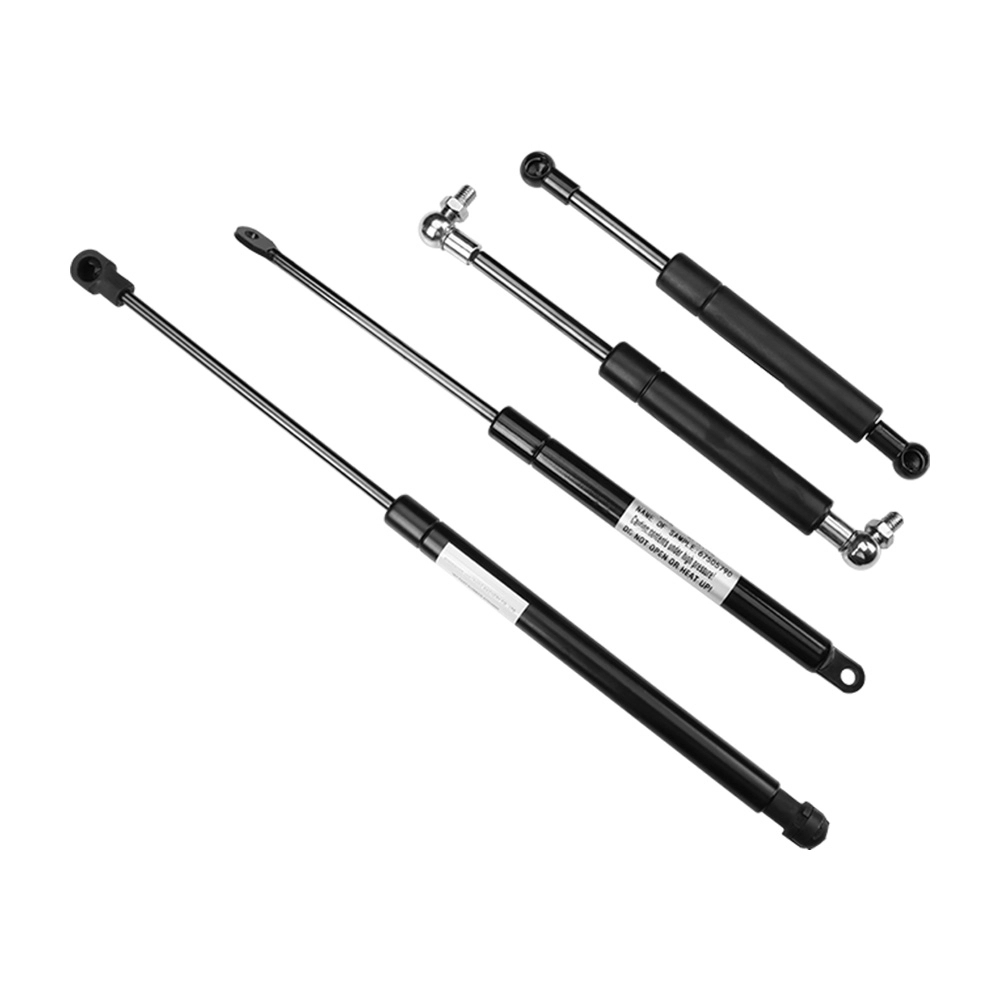
There is no universal number that applies to every product, because lifespan depends heavily on use conditions and design quality. However, from a buyer-intent perspective, the most accurate answer is this: a properly selected Hydraulic Gas Spring can often provide long-term performance over many thousands of operating cycles, while poorly specified or poorly installed products may lose force much earlier.
A Hydraulic Gas Spring generally lasts longer when:
the force rating matches the actual load
seals are high quality
temperature remains within specification
contamination is controlled
corrosion is minimized
installation geometry is correct
cycling frequency is not excessive
A Hydraulic Gas Spring usually wears out faster when:
it is overloaded
the rod is scratched or contaminated
seals dry out or degrade
the operating temperature is too high
vibration is severe
the product is mounted incorrectly
the spring is used in an application it was not designed for
This is why B2B buyers increasingly focus not just on price, but on material quality, seal design, damping consistency, corrosion resistance, and supplier engineering support when sourcing a Hydraulic Gas Spring.
The lifespan of a Hydraulic Gas Spring is mainly determined by several technical factors. These are the issues that matter most in real applications.
Seal performance is one of the most critical variables. If the seal degrades, gas can escape, oil can leak, contaminants can enter, and the Hydraulic Gas Spring will lose both force and motion quality. Machine Design recently noted that twin-seal designs can more than double gas retention compared with single-seal assemblies under adverse conditions. That matters directly for lifespan, especially in dusty, vibrating, high-cycle, or temperature-variable environments.
Temperature has a major impact on the working life of a Hydraulic Gas Spring. High heat accelerates seal wear, reduces lubricant effectiveness, and can shorten component life. Machine Design reports that even a 25-degree Fahrenheit increase in operating temperature can cut the life of an ordinary seal in half in some sealing contexts. While that figure is not specific to all gas springs, the underlying principle is highly relevant: excessive heat is one of the fastest ways to reduce the working life of a Hydraulic Gas Spring.
Dirt, dust, and abrasive particles are major enemies of long service life. If contaminants collect on the rod or damage the seal interface, the Hydraulic Gas Spring can begin leaking or losing force. This is particularly important in construction equipment, factory systems, and exposed mechanical equipment.
A Hydraulic Gas Spring used occasionally in a cabinet has a very different service life from one used continuously in an automated production environment. The more frequently the component cycles, the more quickly wear accumulates. In high-cycle systems, sealing quality, rod finish, and damping design become even more important.
A Hydraulic Gas Spring must be matched to the real load, motion path, and mounting angle. If the spring is too weak, it works too hard and may lose performance faster. If it is too strong, it may create excessive stress on brackets, mounting points, or the product itself. Incorrect geometry can also side-load the rod, increasing friction and wear.
A Hydraulic Gas Spring can offer lifespan advantages over simpler spring systems because the hydraulic damping element reduces shock, controls speed, and minimizes abrupt end-of-stroke impact. In many applications, the biggest cause of premature wear is not only internal pressure loss but repeated harsh motion. A standard spring that slams open or closes hard may increase stress on seals, brackets, and surrounding components. By contrast, a Hydraulic Gas Spring manages energy more smoothly.
This is especially valuable in:
adjustable desks
learning tables
cabinet systems
machine covers
access doors
gaming equipment
industrial machinery
selected automotive applications
The MIRUI product information provided above supports exactly this positioning. Its models emphasize smooth adjustment mechanism, secure locking system, durability, high load-bearing capacity, damper support, and controlled movement for tables, cabinets, machines, and game equipment. Those product features are directly connected to longer effective service life because they reduce impact stress and improve use consistency.
Factor | Standard Gas Spring | Hydraulic Gas Spring |
|---|---|---|
Main energy source | Compressed gas | Compressed gas + hydraulic damping |
Motion quality | Faster, simpler | Smoother, more controlled |
End-of-stroke impact | Potentially higher | Typically reduced |
Suitability for heavy-duty use | Moderate | Better for controlled heavy-duty motion |
Lifespan stability in demanding use | More application-dependent | Often stronger when correctly specified |
Best-fit applications | Basic lift support | Precision, ergonomic, safety-focused systems |
This does not mean every Hydraulic Gas Spring automatically lasts longer than every standard gas spring. The actual result depends on engineering quality and operating conditions. But when a product requires controlled movement and reduced mechanical shock, the Hydraulic Gas Spring often has the stronger long-term value proposition.
Buyers and maintenance teams should watch for early warning signs. A Hydraulic Gas Spring may be approaching the end of its useful life when:
extension force feels weaker
the product no longer stays in position
motion becomes jerky instead of smooth
oil leakage appears near the seal
the rod shows scoring, corrosion, or contamination
damping performance becomes inconsistent
unusual noise develops during movement
In practical maintenance terms, lifespan ends when the Hydraulic Gas Spring no longer performs its intended function safely and reliably, even if it has not physically broken. That is why inspection and replacement planning are important for high-use equipment. Machine Design also emphasizes designing for maintenance, environmental resistance, and inspection to reduce unexpected breakdowns and extend service life.
There are several proven ways to improve the working life of a Hydraulic Gas Spring:
Choose the correct force rating
Select the right stroke length and installation angle
Avoid side loading on the rod
Keep the rod clean from dust and debris
Protect against corrosion in humid or outdoor conditions
Avoid excessive temperature exposure
Use quality seals and durable materials
Replace worn units before total failure in safety-critical systems
These steps matter even more today because industrial automation is expanding and equipment uptime is increasingly valuable. MarketsandMarkets reports that industrial control and factory automation is growing as manufacturers modernize production lines to improve throughput, quality, and cost efficiency. Grand View Research likewise points to continued growth in industrial automation and smart manufacturing. In that context, component lifespan is not just a maintenance issue; it is a productivity issue. A durable Hydraulic Gas Spring supports uptime, safety, and product consistency.
The question “What is the lifespan of a gas spring?” now has stronger commercial importance because end users expect more from equipment. Ergonomics standards and workplace design trends continue to push toward adjustable systems that reduce strain and improve comfort. OSHA states that applying ergonomic principles can substantially reduce the number and severity of musculoskeletal disorders in high-risk industries. That means components such as the Hydraulic Gas Spring are no longer just convenience parts; they help support ergonomic performance in desks, learning tables, adjustable access systems, and equipment covers.
The more these products are used in offices, schools, healthcare support systems, automation cells, and gaming equipment, the more important lifespan becomes. Buyers want a Hydraulic Gas Spring that maintains smooth movement over time, not just one that works on day one.
The supplied MIRUI product information adds useful B2B context to the lifespan discussion. In addition to describing application use, it highlights:
robust steel construction
lockable gas spring options
support for industrial machinery
use in furniture, cabinets, and game equipment
OEM capability
50-piece MOQ
standard lead times of 15–30 days
customized production lead times of 30–45 days
global after-sales support and export documentation
These factors matter because service life is connected not just to the component itself, but also to supplier consistency, replacement planning, and after-sales responsiveness. For importers and equipment manufacturers, choosing a Hydraulic Gas Spring supplier with stable production and technical support can reduce downtime and improve long-term lifecycle cost.
A gas spring can last for many thousands of cycles, but the exact lifespan depends on load, seal quality, temperature, contamination, installation, and use frequency. In real applications, a Hydraulic Gas Spring lasts until it can no longer provide the required force and controlled motion reliably.
A Hydraulic Gas Spring can last longer in demanding applications because hydraulic damping reduces shock and improves motion control. However, actual life still depends on design quality and operating conditions.
The main factors are heat, dust, rod damage, seal wear, overload, vibration, corrosion, and incorrect installation. Seal design is especially important for long-term force retention.
Signs include weaker lift force, failure to hold position, oil leakage, jerky movement, and visible rod or seal damage.
Yes. In industrial machinery and other high-use systems, Hydraulic Gas Spring lifespan affects maintenance cost, equipment uptime, safety, and user experience. Current automation trends make reliability even more valuable.
A lockable gas spring can improve application safety and functionality, but service life still depends on overall design, correct usage, and environmental conditions. The provided MIRUI information shows lockable models designed for smooth adjustment and stable positioning.
In conclusion, the lifespan of a gas spring is not defined by a single number. It is defined by how long the component can continue to deliver safe, stable, and effective performance in its real application. A Hydraulic Gas Spring usually offers stronger long-term value when the product requires smooth motion, controlled damping, and reduced shock. For modern products in furniture, cabinets, gaming systems, and industrial machinery, choosing the right Hydraulic Gas Spring means looking beyond initial force rating and focusing on seal quality, temperature resistance, contamination control, installation accuracy, and supplier reliability. That is the best way to achieve a longer service life and better lifecycle performance.


