

close
Choose Your Site
Global
Social Media

Author: Site Editor Publish Time: 2026-04-02 Origin: Site
When buyers compare motion-control components, one of the most common questions is this: what is the real difference between a gas spring and a hydraulic spring? The short answer is that a gas spring mainly uses compressed gas to provide lifting or supporting force, while a hydraulic spring relies more on fluid-based resistance and control. In many industrial products today, however, the most practical solution is not choosing only one or the other, but using a Hydraulic Gas Spring that combines gas force with hydraulic damping for smoother, safer, and more controlled movement. That is why the Hydraulic Gas Spring has become increasingly important in industrial machinery, adjustable furniture, cabinets, learning tables, gaming equipment, and other forms of mechanical equipment. Broader workplace ergonomics guidance also continues to emphasize adjustability and controlled movement, which supports demand for products built around assisted motion systems.
A standard gas spring is designed to lift, support, or counterbalance a load using compressed nitrogen. It is compact, energy-efficient, and widely used in lids, hatches, covers, and furniture. A hydraulic spring, by contrast, is more closely associated with fluid-based control, damping, and force regulation. In practical engineering applications, the Hydraulic Gas Spring sits between these concepts. It uses compressed gas to generate force, but it also includes hydraulic oil or hydraulic-style damping to regulate speed, absorb shock, and improve stability. This is why a Hydraulic Gas Spring is often selected when a project needs both lifting power and precise motion control rather than simple push-open action.
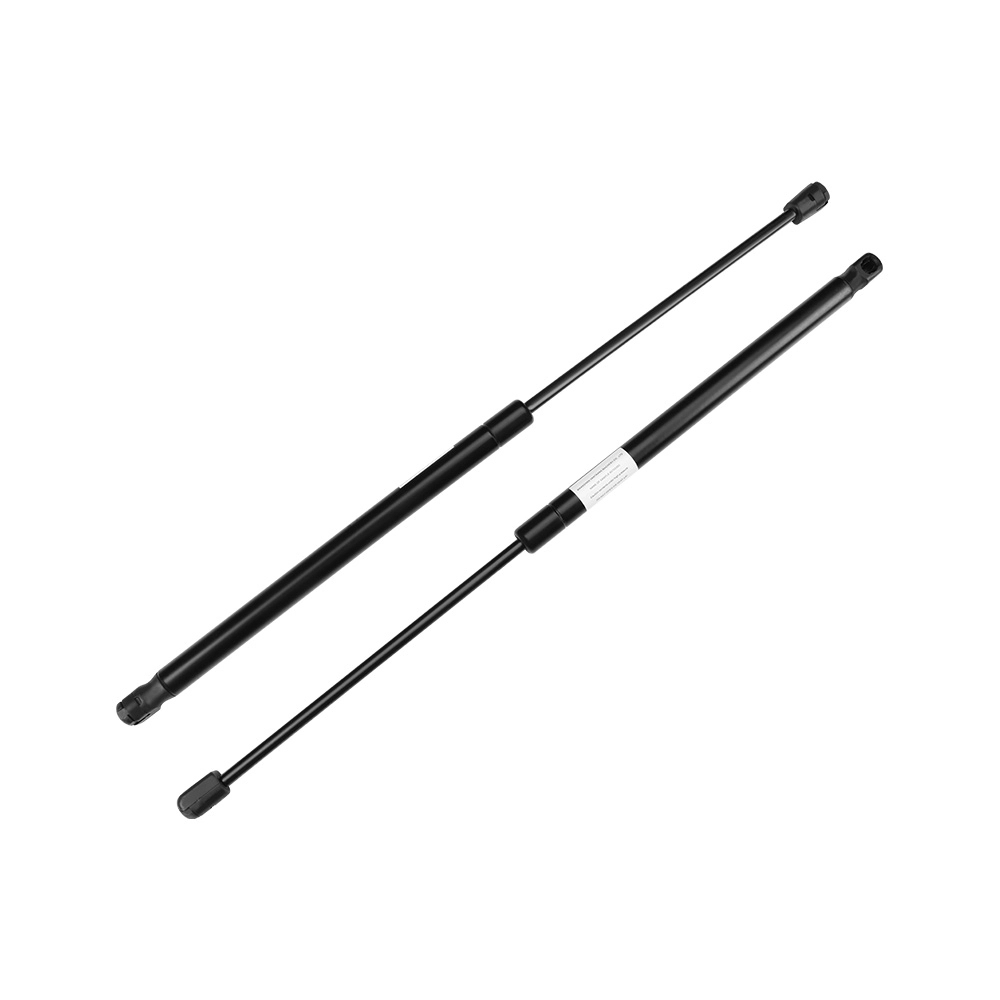
A gas spring is a sealed cylinder filled with pressurized gas, typically nitrogen, with a piston rod that moves in and out. As the rod is compressed, internal pressure rises; when released, that pressure creates extension force. A gas spring is therefore best understood as a compact force-assist device. It is commonly used in furniture, automotive hoods, toolboxes, machine guards, and cabinets because it can make opening and closing much easier. In lighter-duty or lower-cost applications, a gas spring may be enough on its own. But when the movement must be slower, safer, quieter, or more stable, manufacturers often move toward a Hydraulic Gas Spring instead.
The term hydraulic spring is less standardized in general product marketing, but in engineering use it usually refers to a mechanism where hydraulic fluid contributes to controlled movement, resistance, or shock absorption. Unlike a basic gas spring, a hydraulic spring is not mainly about storing energy in compressed gas. It is more about fluid regulation and damping. This distinction matters because users searching for high-performance support components usually care about controlled motion, not just force output. That is exactly where a Hydraulic Gas Spring becomes relevant: it combines the force advantages of gas spring technology with the motion quality of hydraulic control.
The most important difference is the working medium and the resulting motion behavior.
Feature | Gas Spring | Hydraulic Spring | Hydraulic Gas Spring |
|---|---|---|---|
Primary medium | Compressed gas | Hydraulic fluid | Gas + hydraulic damping |
Main function | Lift and support | Resist, damp, control | Lift, support, and control |
Motion feel | Faster, lighter | More restrained | Smooth and balanced |
End-of-stroke behavior | Can be more abrupt | More controlled | Controlled and stable |
Best use cases | Basic lids, flaps, furniture | Heavy-duty damping systems | Adjustable, safety-focused, precision applications |
Typical value | Simplicity and efficiency | Damping and control | Combined force and motion quality |
This table explains why the Hydraulic Gas Spring is increasingly favored in products where user experience and safety matter. A pure gas spring is often enough when a panel simply needs help opening. But if the product needs a smooth adjustment mechanism, a secure locking system, reduced shock, or a more premium operating feel, a Hydraulic Gas Spring is usually the better answer.
A Hydraulic Gas Spring works by combining compressed gas and fluid-based damping in one integrated unit. The compressed gas supplies the extension force, while the hydraulic portion slows and manages the motion. This means a Hydraulic Gas Spring can open or support a load without the “snap” that sometimes occurs in standard gas spring designs. It also means the Hydraulic Gas Spring can reduce vibration, noise, and impact at the end of travel.
This blended performance is especially useful in modern product design because the market increasingly values ergonomics, user comfort, and safe assisted movement. OSHA’s ergonomics guidance stresses the value of reducing strain and supporting safer, better-adjusted work environments, while industrial automation trends continue to push demand for components that improve consistency and equipment handling. In that environment, the Hydraulic Gas Spring fits extremely well.
The difference between a gas spring and a hydraulic spring becomes much clearer in actual use.
For example, in a simple storage lid, a normal gas spring may be sufficient. It opens the lid, supports the weight, and keeps the design cost-effective. But in a learning table, machine guard, or gaming desk, movement quality matters much more. The product may need to stop at a selected height, move quietly, or resist sudden dropping. In those situations, a Hydraulic Gas Spring offers more value than a basic gas spring because it can deliver controlled movement together with support force.
The uploaded MIRUI product information reflects this directly. Its models emphasize features such as lockable gas spring, hydraulic strut, pneumatic hydraulic strut, damper support, and high load-bearing capacity. Those descriptions show that the product line is not aimed only at simple lifting, but at controlled and application-specific motion. The materials, connector options, lockable functions, and smooth-operation claims are consistent with what B2B buyers expect from a Hydraulic Gas Spring supplier.
From an SEO and buyer-intent perspective, the Hydraulic Gas Spring is especially relevant now because market demand is moving toward smarter, safer, and more ergonomic products. Industrial automation continues to expand as manufacturers modernize production lines and seek better productivity, reliability, and motion control. At the same time, adjustable desks, ergonomic chairs, flexible classroom furniture, and user-centered equipment remain important in workplace and education environments. These trends do not just increase demand for lift assistance; they increase demand for motion quality. That favors the Hydraulic Gas Spring over simpler spring systems in many applications.
In practical terms, a Hydraulic Gas Spring is attractive because it supports:
safer lifting and lowering
quieter operation
less operator fatigue
more stable positioning
improved premium feel in the final product
lower shock loads on surrounding components
These benefits are closely tied to current buyer search intent. Many Google users are not only asking what the difference is; they are also asking which solution is better for cabinets, desks, machinery, automotive assemblies, or specialized equipment. In many of those searches, the best-performing answer is often a Hydraulic Gas Spring, not a purely gas-only or hydraulic-only component.
The supplied MIRUI product information gives useful application evidence for the Hydraulic Gas Spring category. Several details stand out:
Smooth adjustment mechanism for learning tables and ergonomic workspaces
Secure locking system to hold the selected position safely
compatibility with cabinets and flexible table systems
versions for industrial machinery and mechanical equipment
models with metal ball ending connectors for multidirectional movement
damper-supported versions for controlled lifting in gaming equipment
use in automotive applications and heavy-duty environments
export support, OEM capability, and defined lead times for B2B buyers
This matters because a Hydraulic Gas Spring is not only about engineering theory. It is also about solving commercial product problems: smoother operation, differentiated product quality, flexible installation, and more reliable after-sales performance. MIRUI’s details on MOQ, delivery, OEM branding, and global support make the Hydraulic Gas Spring more credible from a sourcing perspective, especially for distributors, importers, and equipment manufacturers.
A standard gas spring is usually the right choice when:
the load is moderate
the movement does not need heavy damping
cost efficiency is the main concern
the application is simple, such as a lid or flap
A hydraulic spring or heavily hydraulic solution is often preferable when:
movement resistance and damping are the primary need
the application faces heavy loads or shock conditions
precise fluid-controlled motion is more important than lift assistance
A Hydraulic Gas Spring is the strongest option when:
the application needs both support force and controlled movement
users interact directly with the product
stability, safety, and comfort are important
the product needs adjustable, lockable, or premium-feeling motion
the application includes desks, cabinets, machine covers, construction equipment, medical support systems, or automotive applications
This middle-ground capability is exactly why the Hydraulic Gas Spring continues to gain attention in product development and sourcing decisions.
To choose the right Hydraulic Gas Spring, buyers should review both technical and commercial criteria:
Required force output
Stroke length and installation space
Load direction and mounting angle
Need for locking or positioning
Need for damping or quiet operation
Connector type and corrosion resistance
Cycle life and material durability
MOQ, sample policy, lead time, and OEM support
For example, MIRUI’s product data notes a 50-piece MOQ, standard delivery in 15–30 days, longer lead times for custom models, and OEM branding support. Those practical details can directly affect purchasing decisions for a Hydraulic Gas Spring program.
The main difference is that a gas spring uses compressed gas to create support force, while a hydraulic spring relies more on fluid-based control and damping. A Hydraulic Gas Spring combines both functions in one unit.
In applications that require smoother movement, better safety, reduced shock, or adjustable locking, a Hydraulic Gas Spring is often better than a standard gas spring.
A Hydraulic Gas Spring is commonly used in industrial machinery, cabinets, learning tables, gaming desks, machine doors, ergonomic furniture, and some automotive applications.
Manufacturers choose a Hydraulic Gas Spring because it offers lifting force plus controlled damping. That combination improves safety, comfort, and product quality.
Yes. Many Hydraulic Gas Spring designs include locking features, and the provided MIRUI product information specifically mentions lockable gas spring solutions with a secure locking system.
Demand appears supported by broader trends in ergonomics, adjustable equipment, and industrial automation, all of which increase interest in reliable motion-control components.
In summary, the difference between a gas spring and a hydraulic spring comes down to force versus fluid-controlled motion. But in real-world manufacturing and product design, the most practical solution is often the Hydraulic Gas Spring. By combining gas-powered lifting with hydraulic-style damping, the Hydraulic Gas Spring delivers smoother movement, better stability, and stronger application value across furniture, cabinets, machinery, and specialized equipment. For buyers focused on modern user expectations, safer adjustment, and better product performance, the Hydraulic Gas Spring is often the most commercially and technically relevant choice.


