

close
Choose Your Site
Global
Social Media

Author: Site Editor Publish Time: 2026-04-08 Origin: Site
When people compare motion-control components, one of the most common questions is: what is the difference between a gas spring and a regular spring? The simplest answer is that a regular spring stores mechanical energy in metal through compression, extension, or torsion, while a gas spring uses compressed gas inside a sealed cylinder to generate controlled force. In many modern industrial and ergonomic applications, however, the more relevant product is the Hydraulic Gas Spring, because a Hydraulic Gas Spring does more than provide force. A Hydraulic Gas Spring combines gas pressure with hydraulic-style damping or controlled motion, which makes it more suitable for equipment that needs smooth lifting, stable positioning, and better safety. That is why the Hydraulic Gas Spring is increasingly used in industrial machinery, cabinets, adjustable tables, gaming equipment, and other forms of mechanical equipment. Recent OSHA ergonomics guidance also continues to emphasize adjustable workstations and better workplace design, which supports demand for controlled lifting and positioning components.
A regular spring is one of the oldest and simplest mechanical elements. It works by deforming metal and then returning to its original shape. This makes it useful in suspension systems, small mechanisms, latches, consumer goods, and load-bearing assemblies. A gas spring, by contrast, is a sealed cylinder filled with compressed nitrogen, with a piston rod that moves in and out to create controlled extension force. A Hydraulic Gas Spring takes this concept further by integrating gas-powered lifting with damping and motion control. That distinction matters because modern buyers are not only asking which component stores energy better; they are asking which solution creates smoother movement, better ergonomics, lower noise, and higher product value. Current gas spring market reporting also links demand growth to ergonomics, safety, office equipment, healthcare products, and automotive systems.
A regular spring is a mechanical component made from metal that stores and releases energy when it is compressed, stretched, or twisted. The most familiar examples are compression springs, extension springs, and torsion springs. A regular spring works entirely through the elasticity of the material. When force is applied, the metal changes shape. When the force is removed, the spring returns toward its original form.
Regular springs are widely used because they are simple, low-cost, and reliable in many basic applications. They can be found in door mechanisms, suspension systems, electrical switches, valves, tools, and consumer products. However, a regular spring does not usually provide the same controlled, smooth assisted motion that a Hydraulic Gas Spring can provide. A regular spring is best for energy storage and return, not necessarily for ergonomic lift assistance or premium-feeling movement.
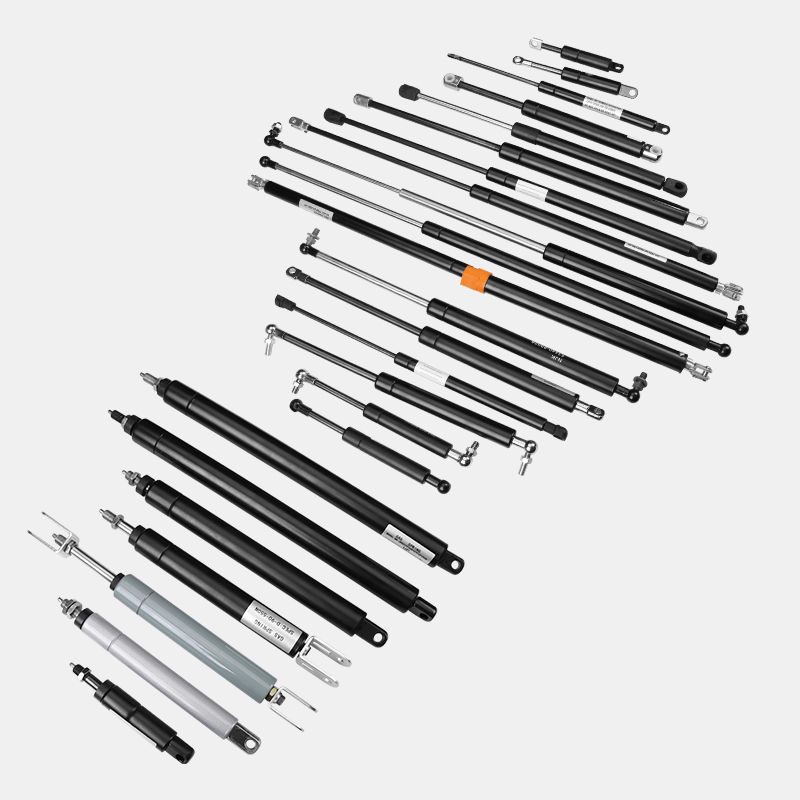
A gas spring uses compressed gas instead of metal elasticity as the main source of force. Inside the cylinder, nitrogen gas is pressurized. When the rod is pushed inward, the gas compresses. When the load is released, the internal pressure pushes the rod outward. This design allows the gas spring to support, lift, lower, or counterbalance loads with smoother force than a conventional metal spring in many applications.
A Hydraulic Gas Spring adds another layer of function. In addition to pressurized gas, a Hydraulic Gas Spring typically includes oil or damping control that helps regulate movement. As a result, a Hydraulic Gas Spring can reduce impact, control extension speed, improve safety, and deliver more refined motion in real-world products. This is especially valuable in products where the user interacts directly with moving parts, such as cabinets, desks, machine doors, and adjustable furniture.
The core difference is the way force is generated and controlled.
Feature | Regular Spring | Gas Spring | Hydraulic Gas Spring |
|---|---|---|---|
Energy source | Elastic metal deformation | Compressed gas | Compressed gas + damping control |
Motion style | Mechanical rebound | Assisted extension | Assisted extension with smoother control |
Precision | Basic | Moderate | Higher in motion-control applications |
Noise and vibration | Can be higher depending on design | Lower in many applications | Typically lower due to damping |
End-of-stroke control | Limited | Better than regular spring | Best for controlled movement |
Best-fit applications | Basic mechanisms | Lift supports and covers | Ergonomic, industrial, premium, safety-focused uses |
This comparison explains why a Hydraulic Gas Spring has become so relevant in current product design. A regular spring may work well in simple mechanical functions, but it does not usually offer the smooth adjustment mechanism, controlled lifting, or stable holding capability that users expect in modern equipment. A Hydraulic Gas Spring is often chosen when the product must open gently, hold at position, or reduce the risk of sudden dropping.
When buyers compare a gas spring with a regular spring, they are often really asking whether they need basic spring force or a higher-level motion-control solution. This is where the Hydraulic Gas Spring becomes important. A Hydraulic Gas Spring does not simply push back like a coil spring. Instead, a Hydraulic Gas Spring provides controlled support through compressed gas while managing movement with hydraulic damping characteristics.
This makes a Hydraulic Gas Spring especially useful in products that need:
controlled opening and closing
better operator safety
quieter movement
premium product feel
adjustable positioning
reduced impact at the end of travel
These benefits align closely with recent market trends. Reports on gas spring demand point to growing use in office equipment, healthcare systems, automotive products, and automation-driven equipment, especially where ergonomics and safety are priorities. OSHA’s current workstation guidance also emphasizes adjustable desks, chairs, and workspaces that fit the user, which directly supports application areas where a Hydraulic Gas Spring adds value.
The practical difference between a gas spring and a regular spring becomes clearer when looking at actual use cases.
A regular spring may help with small mechanical return functions, but it will not usually support a heavy lid in a stable and user-friendly way. A gas spring is much better for assisted opening. A Hydraulic Gas Spring is even better when the lid needs slower, smoother, and safer movement. MIRUI’s supplied product information includes a Pneumatic hydraulic strut for cabinet, which is positioned for exactly this type of use.
A regular spring is not ideal for height-adjustable desks or learning tables because these products need stable positioning and controlled user interaction. A Hydraulic Gas Spring is a stronger solution because it can provide a secure locking system and a smooth adjustment mechanism. This connects directly with current ergonomic trends around adjustable workstations and comfortable task seating.
In industrial machinery, regular springs are useful for simple mechanical preload or return force, but many machine doors, covers, and access systems need controlled assistance instead. A Hydraulic Gas Spring is better suited to these conditions because it reduces harsh motion, supports heavier components, and improves safety during opening and closing. The uploaded MIRUI information includes machine-focused products such as Extension Gas Spring Hydraulic Cylinder Lift Strut for Machine and Gas Spring Metal Ball Ending Hydraulic High Pressure Spring for Mechanical Equipment.
Gaming desks, chairs, and interactive equipment often require quiet and comfortable adjustment. A regular spring is usually too basic for this. A Hydraulic Gas Spring with damper support is more appropriate because it creates smooth and quiet movement. MIRUI’s product information explicitly highlights these advantages in gaming equipment applications.
Although the Hydraulic Gas Spring offers significant advantages, regular springs are still important. They are:
less expensive
mechanically simple
easy to source
effective for high-speed return functions
suitable for compact, low-cost mechanisms
In applications where controlled movement is not necessary, a regular spring can be the most practical choice. For example, a small latch, clip, or low-load mechanism may not benefit from the added complexity of a gas-based solution. The decision depends on performance needs. If the application is simple, a regular spring often wins on cost. If the application requires smoother motion, safer handling, and more premium function, the Hydraulic Gas Spring usually offers better value.
Modern product trends make the Hydraulic Gas Spring more commercially relevant than before. Recent market reporting indicates that the shift toward compact mechanical systems, adjustable motion control, and enhanced ergonomics is accelerating the use of gas springs in both consumer and industrial products. Separate market reporting also points to stronger usage in healthcare, office equipment, and automotive products where safety and ergonomic adjustability matter.
This matters because today’s buyers are not just comparing parts in a technical sense. They are comparing user experience, lifecycle value, and product differentiation. A Hydraulic Gas Spring fits current search intent because it answers several modern needs at once:
controlled lift assistance
ergonomic adjustment
quieter operation
improved safety
higher perceived product quality
The supplied MIRUI product information also reflects these trends. It describes lockable gas spring products for learning tables and workspaces, hydraulic strut solutions for machinery, and damper-supported versions for game equipment. Those are exactly the kinds of applications benefiting from the market shift toward ergonomic and motion-controlled products.
If a buyer is deciding between a regular spring and a Hydraulic Gas Spring, these questions are useful:
Does the product need lift assistance or only return force?
Does the movement need to be smooth and controlled?
Will users interact directly with the moving component?
Is locking or stable holding required?
Is the application in furniture, cabinets, industrial machinery, or mechanical equipment?
Does the product need quieter or more premium operation?
Is safety a key concern?
If most answers point to control, user comfort, or supported lifting, then a Hydraulic Gas Spring is usually a better fit than a regular spring.
From a sourcing perspective, the MIRUI data provides useful purchase details beyond technical application. The supplied information mentions:
MOQ of 50 pieces
standard lead times of 15 to 30 days
customized lead times of 30 to 45 days
OEM support
export documentation support
overseas after-sales service in key regions
steel construction and multiple connector styles
These details matter because the right Hydraulic Gas Spring is not only about function. It is also about supply reliability, project planning, and long-term support. For importers and equipment manufacturers, those commercial details can be just as important as whether the component outperforms a regular spring in motion control.
A regular spring stores energy through metal deformation, while a gas spring uses compressed gas in a sealed cylinder. A Hydraulic Gas Spring goes further by combining gas force with controlled damping and smoother motion.
In many cases, yes. A regular spring is usually simpler and lower in cost. A Hydraulic Gas Spring costs more but provides better control, safety, and user experience.
For adjustable furniture, desks, and learning tables, a Hydraulic Gas Spring is generally better because it offers a smooth adjustment mechanism and often a secure locking system.
A Hydraulic Gas Spring is commonly used in cabinets, adjustable furniture, game equipment, industrial machinery, and other types of mechanical equipment where controlled movement matters.
Sometimes, but only in simpler applications. If the product needs assisted lifting, stable positioning, or controlled motion, a regular spring is usually not an ideal replacement for a Hydraulic Gas Spring.
Demand is growing because more products now prioritize ergonomics, adjustable motion, safety, and user comfort. Current market reporting ties gas spring growth to these exact trends.
In conclusion, the difference between a gas spring and a regular spring is much more than a difference in materials. A regular spring is a basic energy-storage component made from metal, while a gas spring uses compressed gas for assisted force. A Hydraulic Gas Spring adds even more value by delivering smooth, controlled, and stable motion. That is why the Hydraulic Gas Spring is increasingly preferred in modern applications such as cabinets, ergonomic desks, learning tables, gaming systems, and industrial machinery. For buyers who care about user experience, safer movement, and stronger product performance, the Hydraulic Gas Spring is often the more relevant and competitive solution.


