


Gas springs and gas pistons are often used interchangeably, but they have distinct differences in terms of their design, function, and applications. Understanding the differences between them can help you make the right choice for your specific needs, whether you're working in automotive, manufacturing, or airgun industries. In this article, we’ll explore the key distinctions between gas springs and gas pistons, their mechanisms, and their respective advantages and limitations.
What is a Gas Spring?
Definition of a Gas Spring
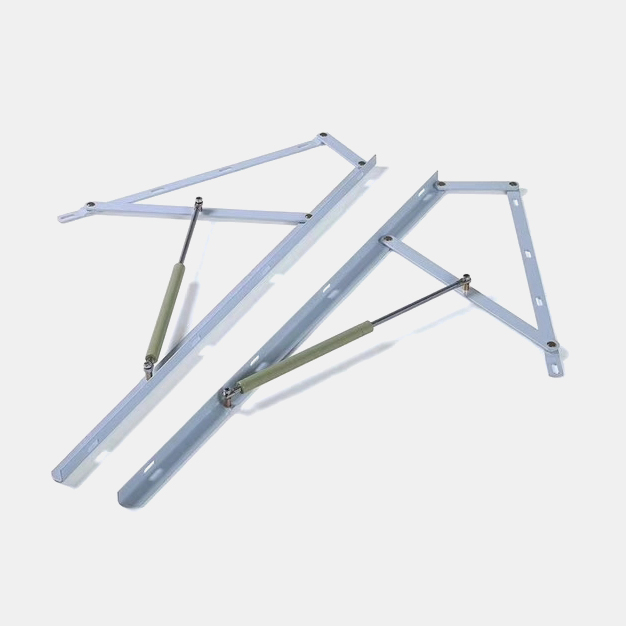
A gas spring is a mechanical device that uses the force of compressed gas to provide movement and support in various applications. They are typically used to support or lift heavy objects, such as car hoods, doors, and medical equipment. Gas springs are designed to store energy in the form of pressurized gas, which, when released, exerts force to move or lift an object.
These devices are commonly referred to as gas struts or gas lifts and are widely used in industries such as automotive, furniture, and aerospace.
How a Gas Spring Works
Gas springs consist of a cylinder filled with pressurized gas, usually nitrogen. When the gas spring is compressed, the gas inside the cylinder is compressed, storing energy. When released, the energy is used to force the piston within the cylinder, creating a lifting force. This force is what allows gas springs to be used in applications where controlled lifting or force is required.
For example, in automotive applications, gas springs are used to lift car hoods or trunk lids with minimal effort. In office chairs, gas springs help with height adjustments, allowing for a comfortable sitting position.
Types of Gas Springs
There are various types of gas springs used in different industries and applications. Some common types include:
Standard Gas Springs: These are the most commonly used type, often found in automotive and furniture applications.
Locking Gas Springs: These springs can lock in place at different positions, providing more control over the movement.
Damped Gas Springs: These are designed to reduce shock or bounce and are often used in applications where smooth movement is crucial, such as in medical beds.

Applications of Gas Springs
Gas springs are versatile and find applications in various industries, such as:
Automotive: Used for hoods, trunk lids, and tailgates.
Furniture: Adjustable chairs, recliners, and sofas.
Medical Equipment: Hospital beds, surgical tables, and stretchers.
Industrial: Lifting mechanisms in machinery and access panels.
What is a Gas Piston?
Definition of a Gas Piston
A gas piston is a component typically used in high-pressure systems such as airguns, gas-powered vehicles, and industrial machines. It works by utilizing pressurized gas to generate force that propels a piston forward to do work. Unlike gas springs, gas pistons are primarily used in systems where the piston’s motion is part of a mechanical process to achieve a specific outcome, such as propelling a projectile or operating a machine.
How a Gas Piston Works
Gas pistons use the energy stored in a compressed gas (often inert gases like nitrogen or CO2) to propel the piston. When the trigger or a valve is activated, the compressed gas is released, and the piston moves forward. This motion can be used to expel a pellet in airguns or operate machinery components in industrial systems.
For example, in airguns, a gas piston works similarly to a spring but uses gas instead of metal coils to propel a pellet. Gas pistons in airguns can provide greater consistency and power compared to traditional spring-powered mechanisms.
Types of Gas Pistons
Inert Gas Technology (IGT): Commonly used in modern airguns, IGT uses a gas-filled cylinder to propel a piston instead of a traditional metal spring.
Gas Ram Systems: Used in airguns, gas ram systems replace traditional springs with a high-pressure gas system.
Gas Power Pistons: These pistons use high-pressure gas to provide smooth, high-force performance, commonly found in industrial machinery and automotive systems.
Applications of Gas Pistons
Gas pistons are primarily used in high-pressure applications, including:
Airguns: Gas piston-powered air rifles provide consistent power and quieter operation compared to spring-powered airguns.
Suspension Systems: Gas pistons are used in vehicle suspension systems to provide a smooth ride by controlling shock absorption.
Industrial Machinery: In machines that require high-pressure systems, gas pistons are used to power various mechanical components.
Automotive: Gas pistons are used in high-performance automotive systems, such as exhaust gas recirculation (EGR) and suspension.
Key Differences Between a Gas Spring and a Gas Piston
Mechanism
The primary difference between gas springs and gas pistons lies in their mechanisms:
Gas Springs: Use pressurized gas to store energy and exert force to lift or support heavy objects. They are typically used for lifting or holding objects in place.
Gas Pistons: Use pressurized gas to propel a piston forward to generate mechanical motion. Gas pistons are often used in applications like airguns, suspension systems, and industrial machinery.
Force Generation
Gas Springs generate force that is used for lifting or supporting an object. The force is relatively steady and gradual, making it ideal for applications that require controlled movements.
Gas Pistons, on the other hand, are designed to provide a burst of force to propel a piston rapidly. This is ideal for high-pressure applications where sudden bursts of energy are needed, such as in airguns and machinery.
Durability and Lifespan
Gas Springs: Generally have a longer lifespan and are less prone to wear over time, though they can still suffer from reduced performance if overused or exposed to extreme temperatures.
Gas Pistons: Gas pistons can wear out over time, particularly in high-pressure systems where the gas may leak or degrade. However, they are designed to provide consistent performance over a set period before requiring maintenance.
Applications
Gas Springs: Ideal for applications like automotive, furniture, and medical equipment where lifting, supporting, or damping is required.
Gas Pistons: Best suited for high-performance applications such as airguns, suspension systems, and machinery that require fast, high-force action.
Ease of Maintenance
Gas Springs are generally easier to maintain, requiring only occasional checks for leaks or wear. They are simple in design and don’t require extensive care.
Gas Pistons require more maintenance, especially in high-pressure applications, as gas leakage or piston wear can affect their performance. Regular cleaning and care are necessary to maintain optimal functionality.
Noise Levels
Gas Springs are generally quieter since their purpose is to provide a smooth, controlled force.
Gas Pistons tend to be louder, especially in applications like airguns, where they are used to expel pellets at high speeds.

Gas Spring vs Gas Piston: Performance Comparison
Accuracy
Gas piston systems tend to be more accurate than traditional spring-powered systems. This is due to faster lock times and a more consistent force output. Gas piston airguns, in particular, provide improved accuracy compared to spring piston airguns due to their quieter and smoother operation.
Velocity
While both gas springs and gas pistons can generate significant force, gas pistons are generally able to produce higher velocities in airguns, often surpassing spring piston airguns in performance. A gas piston air rifle can achieve velocities of up to 1000 ft/s, while spring piston models may be limited to around 800 ft/s.
Shot Cycle
The shot cycle of a gas piston is shorter, meaning there’s less delay between pulling the trigger and the pellet being expelled. In contrast, spring piston airguns may have a longer shot cycle due to the time needed for the spring to compress and release.
Applications of Gas Springs vs Gas Pistons
Gas Springs
Gas springs are commonly used in applications that require lifting or damping, such as:
Automotive: Lifting mechanisms for hoods, trunks, and tailgates.
Furniture: Adjustable office chairs and recliners.
Medical Equipment: Adjustable hospital beds and operating tables.
Industrial Machinery: Lifting and support systems in factories and plants.
Gas Pistons
Gas pistons excel in applications that require fast, high-pressure action:
Airguns: Gas-powered rifles and pistols for shooting sports.
Suspension Systems: In vehicles for shock absorption and smooth rides.
Industrial Machinery: For powering and controlling machinery in high-pressure systems.
Gas Spring vs Gas Piston: Pros and Cons
Gas Springs
Pros:
Long lifespan
Simple design and maintenance
Ideal for lifting and supporting heavy objects
Low noise operation
Cons:
Limited in high-pressure applications
Less versatile compared to gas pistons
Gas Pistons
Pros:
Higher performance in high-pressure applications
Greater consistency and accuracy in airguns
Quieter than spring piston airguns
Cons:
Requires more maintenance
More expensive than gas springs
Can be sensitive and require fine-tuning
Maintenance: Gas Spring vs Gas Piston
Gas Springs
To maintain a gas spring, it’s important to:
Check for gas leaks regularly.
Inspect the spring for wear and replace if necessary.
Keep the cylinder clean and free from debris.
Gas Pistons
Gas pistons require more frequent checks, especially in airguns and high-performance systems. Common maintenance includes:
Ensuring the gas seal is intact.
Regularly cleaning the piston and chamber.
Checking for any degradation in the gas pressure.
Common Mistakes When Choosing Between Gas Springs and Gas Pistons
Misunderstanding the Force Requirements: Choosing a gas spring when a gas piston is needed for high-pressure applications.
Overlooking Maintenance Needs: Gas pistons require more maintenance, which might be overlooked when opting for a higher-performance system.
How to Choose Between a Gas Spring and Gas Piston
When choosing between a gas spring and a gas piston, consider factors such as:
Application needs: Is consistent force or high performance required?
Maintenance capabilities: Are you prepared for the extra care required by gas pistons?
Cost considerations: Gas springs are more cost-effective but less versatile than gas pistons.
FAQs on Gas Springs and Gas Pistons
What is the main difference between a gas spring and a gas piston?
A gas spring uses compressed gas to provide force for lifting or supporting objects, while a gas piston uses gas to propel a piston forward in high-pressure systems.
Can a gas piston be used in place of a gas spring?
Generally, no. Gas pistons are designed for high-pressure applications, whereas gas springs are used for lifting and supporting.
Which lasts longer, a gas spring or a gas piston?
Gas springs typically have a longer lifespan as they are less complex and face less wear compared to gas pistons.
Are gas pistons better for high-pressure applications than gas springs?
Yes, gas pistons are better suited for high-pressure systems, such as airguns and industrial machinery, due to their ability to generate more force.
Can I repair a gas piston myself, or do I need a professional?
Repairing a gas piston is more complex and often requires professional help, especially if there are issues with the gas seals or pressure system.
Conclusion
In summary, both gas springs and gas pistons offer distinct advantages depending on the application. Gas springs are ideal for lifting and supporting objects with minimal maintenance, while gas pistons are better suited for high-performance, high-pressure environments. When choosing between the two, consider your specific needs, budget, and maintenance capabilities to make an informed decision.


