

close
Choose Your Site
Global
Social Media

Gas springs are quiet workhorses. They lift the hood of your car, adjust your office chair, and help position hospital beds with precision. Despite their ubiquity, many people don’t fully understand what gas springs are or why they’re so effective across such diverse applications.
This guide will walk you through how gas springs work, the main types available, and the industries that depend on them. Whether you’re an engineer selecting components for a new design, a manufacturer looking to improve product performance, or simply curious about the mechanics behind everyday conveniences, this article will give you a clear understanding of what gas springs do and why they matter.
A gas spring is a sealed cylinder filled with pressurized nitrogen gas and a small amount of oil. Inside the cylinder, a piston is attached to a precision rod. When force is applied to the rod, the piston moves through the cylinder, compressing the gas and increasing internal pressure. This pressure generates a controlled output force that can be used to lift, support, or dampen motion. The oil serves a dual purpose: it lubricates the internal components and provides damping, which controls the speed of movement. This combination of gas compression and hydraulic damping gives gas springs their characteristic smooth, controlled motion.
Think of it like a bicycle pump in reverse. Instead of pumping air in to build pressure, the gas spring already contains pressurized gas. When you compress the rod, the gas pushes back with increasing force. When you release it, the gas expands, pushing the rod back out in a controlled manner. The key advantage over mechanical coil springs is that gas springs are pre-pressurized and ready to deliver force immediately. There’s no need to compress them first, and they maintain consistent performance throughout their stroke.
Understanding the mechanics of a gas spring requires looking at two distinct phases: compression and extension.
Compression Stroke
When an external force pushes the piston rod into the cylinder, the internal gas volume decreases. According to Boyle’s Law, when the volume of a gas decreases, its pressure increases proportionally (assuming constant temperature). As the rod compresses further into the cylinder, the internal pressure rises, creating greater resistance. This is why a gas spring feels progressively harder to compress the further you push it.
Extension Stroke
When the external force is removed, the compressed gas expands, pushing the piston rod back out of the cylinder. The oil inside provides damping, which controls how quickly the rod extends. Without this damping, the rod would shoot out rapidly, which could be dangerous and difficult to control.
Understanding P1, P2, and K-Factor
The force of a gas spring isn’t constant throughout its stroke. It varies based on how far the rod is compressed. Two key measurements describe this behavior:
P1 Force: The force when the rod is fully extended (minimum compression).
P2 Force: The force when the rod is fully compressed (maximum compression).
The ratio between these two forces is called the K-Factor, or progression rate. Most gas springs have a K-Factor ranging from 1.05 to 1.8, meaning the force increases by 5% to 80% from full extension to full compression. This relatively low progression gives gas springs smoother, more predictable behavior compared to mechanical coil springs, which can have much higher progression rates.
The force at any given position can be calculated using the formula:
F = P1 + (k × X)
Where:
F is the force at a given position
P1 is the initial force when fully extended
k is the spring constant (force change per unit of compression, measured in N/mm)
X is the deflection distance in mm
This progressive force behavior makes gas springs ideal for applications requiring controlled, gradual resistance rather than abrupt changes in force.
Gas springs come in several configurations, each designed to meet specific application requirements. Choosing the right type depends on factors like load characteristics, control needs, and whether adjustability is required.
Fixed gas springs are manufactured with a predetermined force that cannot be adjusted after production. The internal pressure is set during manufacturing based on the application’s requirements. Once installed, they’re ready to use immediately. These are the most common type of gas spring and are ideal when the load requirements are known in advance. They’re used in car hoods, trunk lids, industrial access panels, and machinery covers where consistent, reliable force is needed every time. Fixed gas springs offer simplicity and cost-effectiveness. There’s no need for adjustment mechanisms, which reduces complexity and potential failure points.
Adjustable gas springs feature a valve that allows the internal pressure to be modified after installation. This makes them perfect for prototyping, research and development, or situations where the exact load requirements aren’t known upfront. Engineers can fine-tune the force to match the actual load, eliminating the guesswork involved in selecting a fixed-force spring. This flexibility is particularly valuable in custom assemblies or applications where load conditions may change over time. The trade-off is slightly higher cost and a more complex design compared to fixed springs. However, the ability to adjust pressure in the field can save time and reduce the need for multiple trial-and-error installations.
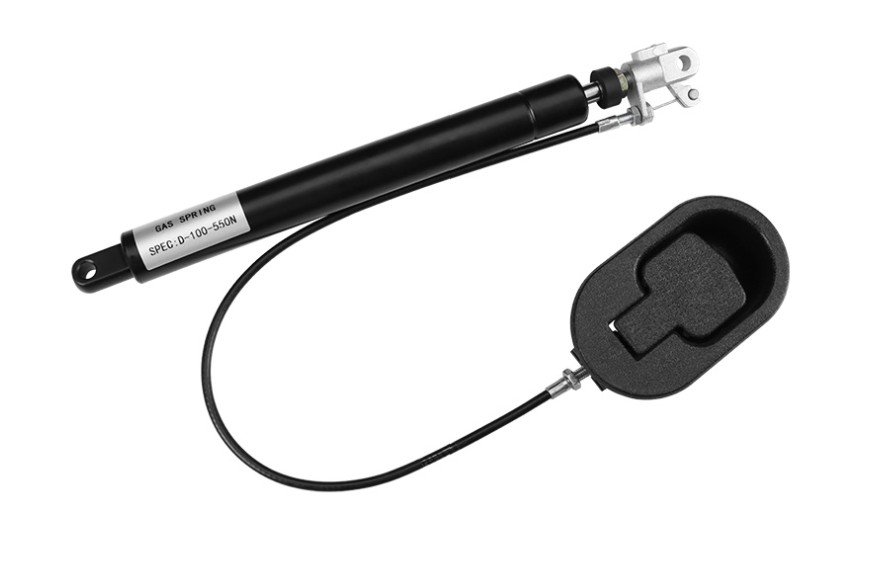
Lockable gas springs can be locked at any position along their stroke, effectively becoming rigid support structures. They typically feature a button or lever that, when activated, prevents the piston rod from moving in either direction. This capability is essential in applications requiring precise positioning and holding force, such as hospital beds, adjustable dental chairs, examination tables, and office chairs with height adjustment. The locking mechanism provides safety and stability, ensuring the component stays in place even under significant load. When unlocked, the gas spring functions like a standard unit, allowing smooth, controlled motion. This dual functionality makes lockable gas springs highly versatile.
Unlike standard gas springs that push, traction gas springs pull. The piston rod starts in a relaxed, extended position, and the cylinder pulls it back when activated. This creates a controlled pulling force rather than a pushing force. Traction gas springs are used in applications where objects need to be lifted or held in a raised position, such as retractable awnings, pull-down storage systems, and certain types of lifting mechanisms. They’re particularly useful when space constraints make pushing mechanisms impractical. The pulling action is smooth and controlled, just like the pushing action of standard gas springs, making them reliable for applications requiring consistent retraction force.
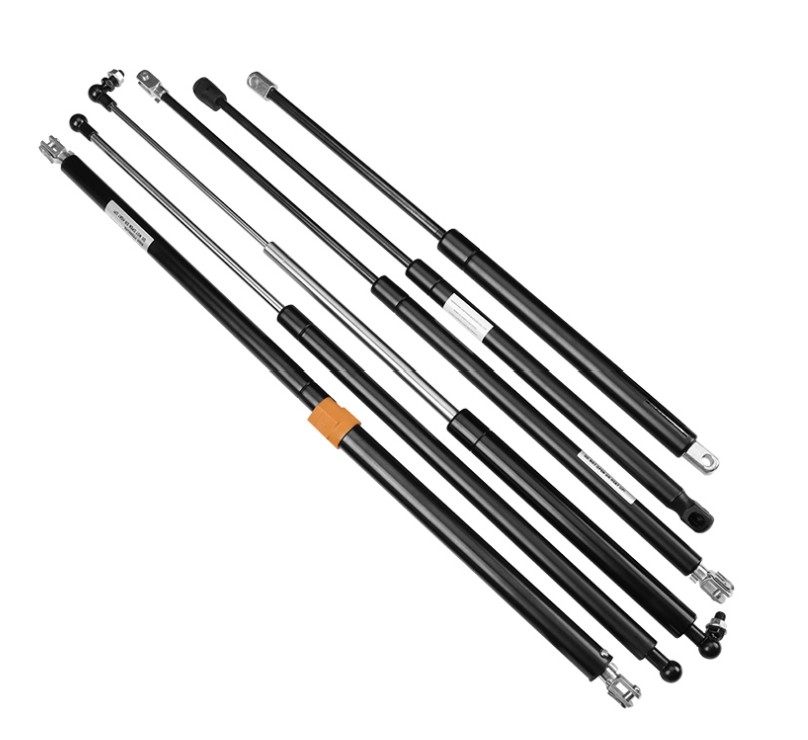
Hydraulic dampers are specialized gas springs designed primarily for motion control rather than force assistance. They provide resistance to movement in one or both directions, creating a soft-close or shock-absorption effect. These are commonly found in furniture applications like soft-closing cabinet doors, drawers, and toilet seats. They’re also used in heavy machinery to dampen vibration and shock, and in vehicles to control suspension movement. The damping characteristics can be tuned to provide different levels of resistance depending on the application requirements. Some dampers are adjustable, allowing users to change the damping force as needed.
Gas springs have become essential components across numerous industries. Their ability to provide controlled force without external power, combined with their compact design and reliability, makes them ideal for applications ranging from everyday furniture to critical aerospace systems.
The automotive industry relies heavily on gas springs for both convenience and safety. Every time you lift your car’s hood or open the trunk, there’s a good chance gas springs are doing the heavy lifting.
Hood and Trunk Support
Gas springs hold open vehicle hoods and trunks, eliminating the need for prop rods and providing smooth, controlled motion. They’re calibrated to the specific weight of the hood or trunk lid, ensuring it opens easily and stays securely in place. This improves user experience and reduces the risk of the lid falling unexpectedly.
Tailgates and Hatchbacks
SUVs, hatchbacks, and station wagons use gas springs to assist with opening and closing rear tailgates. The springs counterbalance the weight of the tailgate, making it easy to lift even when fully loaded with cargo.
Adjustable Seats
Many vehicle seats use gas springs for height adjustment, providing smooth, controlled movement that can be locked at any position. This is particularly common in commercial vehicles, RVs, and buses where driver comfort and ergonomics are priorities.
Suspension Systems
Some advanced suspension systems incorporate gas springs to provide progressive damping characteristics. These systems adjust to road conditions and vehicle load, improving ride comfort and handling.
The automotive sector values gas springs for their durability, consistent performance across temperature ranges, and ability to function reliably over hundreds of thousands of cycles.
Manufacturing and industrial environments present some of the most demanding applications for gas springs. They’re used to support heavy equipment covers, control access panels, and assist with repetitive lifting operations.
Machine Guards and Access Panels
Industrial machinery often features heavy protective covers and access panels that need to be opened frequently for maintenance. Gas springs make these panels easy to lift and hold securely in the open position, improving worker safety and reducing physical strain.
Assembly Line Assistance
Gas springs assist with positioning components during assembly operations. They can support workpieces at ergonomic heights, reducing worker fatigue and improving productivity. The controlled motion prevents sudden movements that could damage delicate components.
Vibration and Shock Absorption
In applications involving impact or vibration, gas springs act as shock absorbers, protecting sensitive equipment and reducing noise. They’re used in presses, stamping machines, and packaging equipment where controlled damping is essential.
CNC Machine Enclosures
Computer numerical control (CNC) machines often use gas springs to support their protective enclosures. These covers need to be opened regularly for loading materials and maintenance, and gas springs make this operation effortless regardless of the cover’s weight.
Industrial applications typically require gas springs with higher force ratings and more robust construction to withstand harsh operating conditions, including exposure to dust, chemicals, and extreme temperatures.
The furniture industry has embraced gas springs as essential components for creating adjustable, user-friendly products that improve comfort and functionality.
Office Chairs
Height-adjustable office chairs rely on gas springs to provide smooth, effortless adjustment. The lockable gas spring allows users to set their preferred seat height and lock it in place, supporting proper ergonomic positioning throughout the workday.
Adjustable Desks
Standing desks and adjustable-height work surfaces use gas springs to counterbalance the weight of the desktop, making height changes smooth and easy. This encourages users to alternate between sitting and standing positions, promoting better health and comfort.
Cabinet Doors and Lids
Gas springs provide soft-closing action for kitchen cabinets, preventing doors from slamming and reducing wear on hinges. They’re also used in storage boxes, toy chests, and piano benches to prevent lids from dropping suddenly, which could cause injury.
Reclining Furniture
Reclining chairs and sofas use gas springs to assist with the reclining motion and to support the backrest at various angles. This creates a smooth, controlled experience that enhances user comfort.
Adjustable Beds
Modern adjustable beds incorporate gas springs to assist with raising and lowering different sections of the mattress platform. This allows users to find their ideal sleeping or reading position with minimal effort.
The furniture industry values gas springs for their quiet operation, smooth motion, and ability to maintain consistent performance over many years of daily use.
Healthcare environments demand precise, reliable equipment that supports both patient comfort and caregiver efficiency. Gas springs play a crucial role in making medical equipment more functional and user-friendly.
Hospital Beds
Adjustable hospital beds use lockable gas springs to control backrest and leg positioning. These springs allow caregivers to easily adjust bed positions for patient comfort and medical procedures, then lock them securely in place. The smooth, controlled motion reduces patient discomfort during adjustments.
Dental Chairs
Dental chairs require precise positioning to accommodate different procedures and patient sizes. Gas springs provide smooth height adjustment and backrest control, allowing dentists to position patients optimally while minimizing physical strain on staff.
Examination Tables
Medical examination tables use gas springs for height adjustment and backrest positioning. This ensures patients can be positioned comfortably and safely, while allowing healthcare providers to work at ergonomically appropriate heights.
Surgical Equipment
Operating room equipment, including surgical lights, monitors, and instrument trays, often incorporates gas springs for smooth positioning. The precise control and locking capability ensure equipment stays exactly where positioned, which is critical during surgical procedures.
Mobility Aids
Wheelchairs, walkers, and patient lifts use gas springs to provide adjustable height and positioning features. The smooth, controlled motion improves safety and makes these devices easier to use for both patients and caregivers.
Medical applications require gas springs manufactured to strict quality standards, often with corrosion-resistant materials and special seals to withstand frequent cleaning with disinfectants.
Aerospace and marine applications present unique challenges, including weight constraints, corrosion concerns, and the need for absolute reliability in critical systems.
Aircraft Doors and Compartments
Commercial aircraft use gas springs in passenger doors, cargo doors, and overhead compartment lids. The springs must be lightweight yet strong enough to handle the required loads, and they must function reliably across a wide range of temperatures and pressures.
Aircraft Seating
Adjustable aircraft seats, particularly in first-class and business-class cabins, use gas springs for reclining mechanisms and footrest adjustment. These applications prioritize smooth, quiet operation to enhance passenger comfort.
Cargo Systems
Freight aircraft and military transports use heavy-duty gas springs in cargo loading systems and access panels. These springs must handle substantial loads while maintaining precise control during operation.
Marine Hatches
Ships, boats, and submarines use gas springs for hatches and access panels, particularly in areas exposed to seawater. These applications require stainless steel or specially coated gas springs to resist corrosion in harsh marine environments.
Equipment Covers
Marine equipment covers, engine compartments, and storage lockers use gas springs to provide controlled opening and secure holding. The corrosion-resistant construction ensures reliable operation even in saltwater environments.
Aerospace applications prioritize lightweight materials like aluminum and titanium, while marine applications focus on corrosion resistance through stainless steel construction and specialized coatings.
Gas springs offer several advantages that make them the preferred choice over mechanical springs and powered actuators in many applications.
Controlled, Smooth Motion
The combination of gas compression and hydraulic damping creates exceptionally smooth motion throughout the entire stroke. Unlike mechanical springs that can exhibit jerky or unpredictable behavior, gas springs provide consistent, controlled force that enhances user experience and equipment performance.
No External Power Required
Gas springs are self-contained, requiring no electricity, hydraulics, or pneumatic air supply. This simplifies installation, reduces system complexity, and eliminates energy costs associated with powered actuators. It also makes gas springs ideal for portable equipment and applications where power availability is limited.
Safety and Ease of Operation
Gas springs make heavy objects easy to lift and hold in position, reducing physical strain and the risk of injury. The controlled motion prevents sudden movements that could cause accidents or equipment damage. In medical and healthcare applications, this translates directly to improved patient and caregiver safety.
Compact Design
Gas springs deliver significant force in a compact package. Their cylindrical design fits easily into tight spaces where mechanical linkages or powered actuators would be impractical. This design flexibility gives engineers more freedom when designing products.
Flexible Installation
Gas springs can be installed at various angles and orientations, providing design flexibility. They function reliably whether mounted vertically, horizontally, or at any angle in between. This adaptability makes them suitable for a wide range of applications and mounting configurations.
Long Service Life
Quality gas springs are designed for hundreds of thousands or even millions of cycles. They require no maintenance under normal operating conditions, as they’re sealed units with internal lubrication. This longevity reduces replacement costs and downtime over the product’s lifetime.
Customizable Performance
Manufacturers can tailor gas spring characteristics to specific applications by adjusting internal pressure, cylinder diameter, rod diameter, stroke length, and damping characteristics. This customization ensures optimal performance for each unique application.
What are the most common types of gas springs?
The most common types are fixed gas springs (pre-set force), adjustable gas springs (tunable pressure), lockable gas springs (can be locked at any position), traction gas springs (provide pulling force), and hydraulic dampers (primarily for motion control). Fixed gas springs are the most widely used due to their simplicity and cost-effectiveness.
How long does a gas spring last?
Quality gas springs typically last between 40,000 and 100,000 cycles, though some heavy-duty models are rated for over one million cycles. Lifespan depends on factors including operating environment, load conditions, installation quality, and frequency of use. In typical automotive applications, gas springs often last the lifetime of the vehicle.
Can gas springs be repaired or recharged?
Most gas springs are sealed units designed for replacement rather than repair. While some specialized companies offer recharging services for large industrial gas springs, the cost often approaches or exceeds the price of a new unit. For standard applications, replacement is more practical and cost-effective than attempting repairs.
What’s the difference between a gas spring and a damper?
Gas springs are designed primarily to provide force assistance (lifting or supporting loads), while dampers are designed primarily to control motion and provide resistance. Gas springs typically have higher internal pressure and are optimized for force output, whereas dampers have lower pressure and are optimized for consistent damping characteristics. Some applications use hybrid designs that provide both force assistance and damping.
How do I know what force I need?
The required force depends on the weight of the object being moved, the mounting geometry, and the desired feel of the motion. A general rule is to use gas springs with combined force equal to 60-80% of the load weight for assisted opening applications. However, precise calculations should account for lever arms, mounting angles, and center of gravity. Many manufacturers provide online calculators or engineering support to help determine the correct specifications. When in doubt, adjustable gas springs allow for fine-tuning in the field.
Gas springs have become indispensable components across virtually every industry that requires controlled motion, force assistance, or precision positioning. Their ability to deliver smooth, reliable performance without external power, combined with their compact design and long service life, makes them ideal solutions for applications ranging from everyday furniture to critical aerospace systems.
Understanding what gas springs are used for helps engineers, designers, and manufacturers make informed decisions about motion control solutions. Whether you’re developing a new product, improving an existing design, or simply replacing worn components, gas springs offer proven technology that balances performance, cost, and reliability.
The next time you adjust your office chair, open your car’s trunk, or witness the precise positioning of a hospital bed, take a moment to appreciate the engineering behind these quiet workhorses. Gas springs may be hidden from view, but they’re hard at work making our lives more comfortable, safe, and efficient. For applications requiring controlled motion and force assistance, gas springs remain one of the most elegant and effective solutions available. Their continued evolution and adaptation to new industries ensures they’ll remain essential components for years to come.


