

close
Choose Your Site
Global
Social Media

Author: Site Editor Publish Time: 2026-10-16 Origin: Site
Struggling with a heavy, slamming machine panel or a vehicle hood that refuses to stay up? When you try to prop open a 50-pound steel CNC machine cover with one hand while holding a wrench in the other, safety is instantly compromised. Manual lifting is not just physically exhausting. It introduces significant workplace and household hazards. Mechanical coil springs are commonly used for these tasks, but they frequently suffer from metal fatigue. They lose their tension rapidly under continuous load.
A pneumatic lifting mechanism effectively eliminates this structural vulnerability. By utilizing compressed gas, these units provide seamless and controlled motion. In this comprehensive guide, we will explore the core applications demanding reliable motion control, examine how these precision-engineered components function on the factory floor, and break down the exact specifications required for your next engineering project.
Core Mechanism: These components utilize compressed nitrogen gas to provide a smooth and consistent lifting force. This eliminates the sudden drops associated with worn mechanical hinges.
Versatile Applications: Use cases range from lightweight household cabinetry and recreational vehicles to heavy-duty industrial enclosures and medical equipment.
Automotive Necessity: Automotive struts act as critical safety components for vehicle hoods, tailgates, and off-road equipment operating in harsh environments.
Engineering Precision: Selecting the correct unit requires precise calculations of force, stroke length, and exact mounting geometry.
Maintenance Protocol: Proper installation ensures internal seal lubrication. Mounting the piston rod downward maximizes the operational lifespan of the component.
To understand why these components are integrated into complex industrial designs, we must examine their internal mechanics. A standard pneumatic spring operates on fundamental principles of fluid dynamics and gas pressure. This provides a level of motion control that traditional mechanical alternatives simply cannot match.
A standard unit consists of a pressure tube, often called the cylinder, a polished piston rod, a piston head, specialized sealing systems, and pressurized nitrogen gas. In addition to the gas, a small amount of synthetic oil sits inside the cylinder. This oil serves a dual purpose. It lubricates the internal seals and provides end-of-stroke damping.
Pushing the piston rod into the cylinder compresses the internal nitrogen. This inert gas behaves predictably across extreme temperature shifts. The internal pressure creates an outward reaction force against the cross-sectional area of the piston. Consequently, this continuous outward pressure provides the reliable lifting support required to hold heavy doors or panels open without human intervention.
Engineers consistently choose gas-charged units over traditional metal coil springs due to objective mechanical advantages. Coil springs exert force linearly. This means their lifting power drops significantly as the spring extends. Pneumatic devices maintain a much flatter force curve to provide consistent support throughout the entire range of motion.
These devices feature built-in hydraulic damping. As the piston reaches the end of its extension, the oil inside the cylinder slows the movement. This creates a seamless soft-stop effect. This specific engineering feature prevents the jarring impacts that severely damage hinges or warp structural frames over time.
| Feature | Pneumatic Gas Spring | Mechanical Coil Spring |
|---|---|---|
| Force Curve | Flat and consistent throughout extension | Linear drop in force as it extends |
| Motion Control | Built-in hydraulic soft-stop damping | No damping, prone to harsh impacts |
| Space Efficiency | Compact design with high force output | Requires bulky coils for high force |
| Fatigue Resistance | High resistance to structural fatigue | Prone to metal fatigue and sagging |
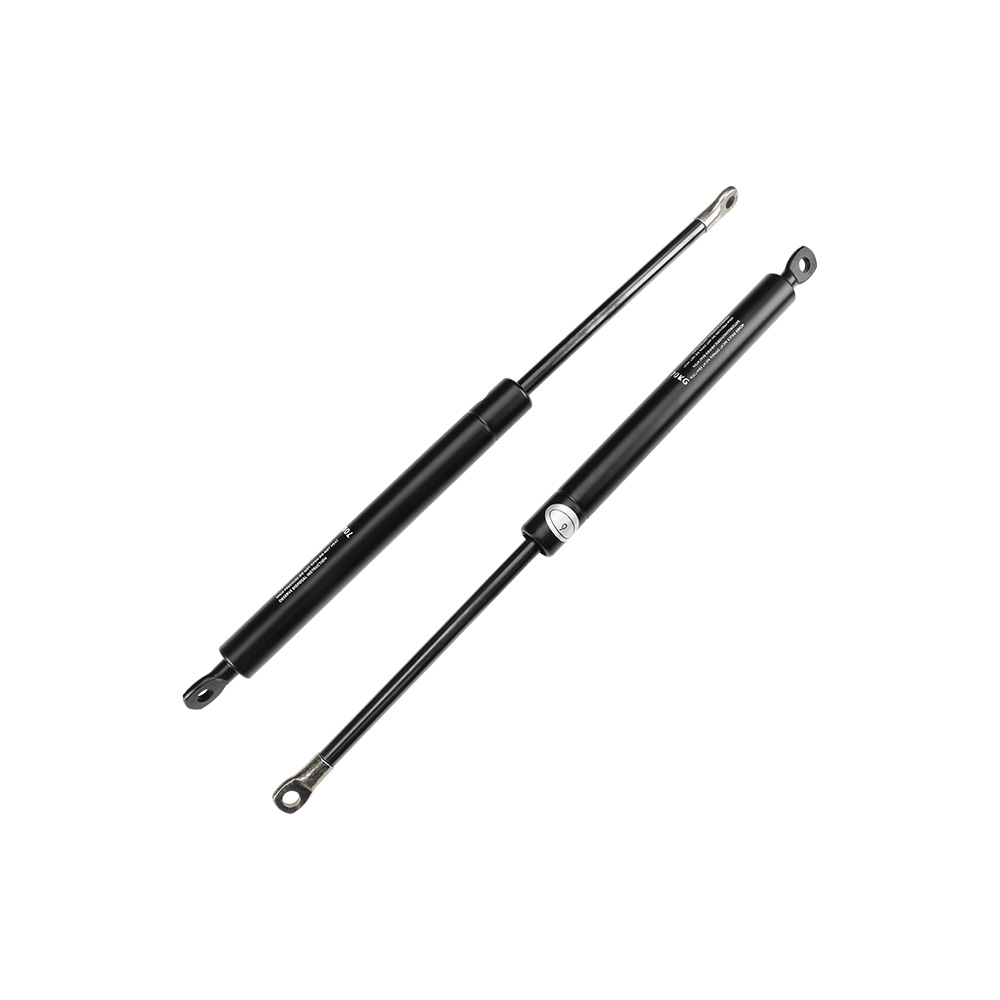
The automotive and transportation sector relies heavily on precise motion control to ensure user safety and vehicle functionality. Integrating pneumatic lifting supports has transitioned from a luxury feature to an absolute industry standard for modern vehicle manufacturing.
In daily automotive use, an automotive gas spring is indispensable. Vehicle hoods and rear tailgates are constructed from heavy sheet metal or reinforced composites. Without pneumatic assistance, lifting these components requires significant physical exertion. This poses an ergonomic hazard to the user. These struts are engineered to counterbalance the exact weight of the automotive panel. They make the lifting process nearly effortless while securely holding the panel open to prevent accidental closures during engine maintenance.
The recreational vehicle industry demands components that save space while offering maximum utility. Pop-up campers utilize heavy-duty struts to assist users in raising bulky roof panels against gravity. These components are also widely used in under-bed storage compartments and exterior luggage doors. In these mobile applications, the units must maintain their pressure integrity despite constant road vibrations and shifting weight loads.
For extreme terrain vehicles like snowmobiles, all-terrain vehicles, and heavy-duty utility task vehicles, the operational requirements are highly stringent. Struts in these applications must be manufactured with specialized seals designed to withstand freezing temperatures. Standard rubber can become brittle and leak nitrogen in extreme cold. The damping fluid must possess a specific viscosity index to remain fluid in sub-zero environments to ensure reliable access to critical engine compartments in the wilderness.
In the industrial sector, the focus shifts from user convenience to strict occupational safety and operational efficiency. Heavy machinery requires robust components capable of withstanding continuous, high-frequency duty cycles in harsh factory environments.
Looking at current industry trends, market research highlights a distinct pivot toward ergonomic automation in factory environments. As occupational health standards globally become increasingly stringent, facility managers are systematically replacing static mechanical hinges with dynamic pneumatic motion control systems. This industry-wide shift is driven by field data showing that neutralizing the weight of heavy equipment access points directly correlates with a drastic reduction in workplace musculoskeletal injuries. This focus on worker safety continues to propel the industrial hardware market to sustained year-over-year growth.
Modern manufacturing equipment, such as CNC milling machines, industrial power generators, and large-scale commercial printers, are enclosed in heavy protective casing. This shields operators from moving parts and flying debris. When maintenance is required, operators must lift these heavy access panels. A properly specified machinery support spring becomes highly critical here. It ensures the panel lifts smoothly and remains securely locked in the open position. This prevents the enclosure from collapsing and causing severe crush injuries to maintenance personnel.
Occupational Safety and Health Administration guidelines heavily emphasize the reduction of physical strain in the workplace. Integrating lifting supports into assembly line workstations helps facilities achieve strict compliance with these ergonomic standards. They assist workers in lifting heavy testing jigs, operating conveyor drop-gates, and adjusting industrial workstation heights. By neutralizing the weight of heavy tools, these components significantly reduce worker fatigue.
Tractors, excavators, and combine harvesters operate in environments filled with abrasive dust, moisture, and extreme temperature fluctuations. The pneumatic lifters used on tractor cabin doors and engine cowlings are often equipped with protective wiper seals and corrosion-resistant nitride rods. This robust construction prevents dirt from entering the pressure cylinder to ensure reliable support even in the most demanding agricultural settings.
Beyond industrial uses, pneumatic lifting technology has revolutionized modern interior design and cabinetry. It brings ergonomic engineering directly into residential households.
Modern kitchen designs frequently feature upward-opening cabinet doors rather than traditional side-swinging doors. This design maximizes space and prevents head injuries from open cabinet doors left ajar. A standard lifting gas spring provides a soft-open and stay-open functionality. Once the door is pushed past a certain angle, the internal pressure takes over. It smoothly lifts the door to its maximum height and holds it securely until the user pulls it closed.
Urban living spaces often require dual-purpose furniture to maximize square footage. Wall-mounted Murphy beds and ottoman-style under-bed storage rely entirely on precise motion control. A king-size mattress and wooden frame easily weigh well over 100 pounds. Installing calibrated pneumatic struts at the pivot points perfectly counterbalances the heavy load. This allows a single user to lift the bed frame with one hand safely.
In the healthcare and ergonomic equipment sectors, the performance of a lifting mechanism directly impacts patient safety and therapeutic outcomes. Movement must be entirely jolt-free, silent, and highly controlled.
Hospital beds utilize a combination of electric actuators and pneumatic supports to adjust backrest and leg elevations. In manual beds, these components allow healthcare professionals to adjust the patient position smoothly without dropping the heavy frame. Overbed tables also use lockable struts inside the central column. This allows the table height to be adjusted effortlessly and locked firmly in place to hold medical equipment.
The modern office environment has seen a massive shift toward sit-stand desks. While many are motorized, pneumatic standing desks use a counterbalance system. This allows the user to press a release lever and glide the desk upward or downward instantly without relying on electrical power. Physical therapy equipment also incorporates these springs to provide adjustable resistance for patient rehabilitation exercises.
Selecting the correct component for your application is not a matter of guesswork. Installing a unit with inadequate force results in a heavy lid that fails to stay open. A unit with excessive force can damage hinges, warp panels, or cause structural failure. Engineers and designers rely on precise mathematical calculations to determine exact specifications.
The lifting capacity of a gas spring is measured in Newtons. To calculate the required force, you must evaluate the physical dimensions and weight distribution of the object being lifted. A common standard formula dictates that the necessary force equals the mass of the lid multiplied by gravity, multiplied by the center of gravity distance, divided by the mounting distance, plus a 15 percent safety margin.
When sourcing a reliable support gas spring, you will encounter standard industrial parameters. High-quality manufacturers typically offer units with tube diameters ranging from 15 millimeters for lightweight cabinetry up to 28 millimeters for heavy industrial hoods. Force ratings can be customized anywhere from a gentle 50 Newtons up to a massive 2500 Newtons. Stroke lengths are equally customizable, generally spanning from 50 millimeters for tight spaces to over 500 millimeters for large access panels.
The safety margin in your calculation is absolutely critical. It compensates for variables such as internal friction, potential wind resistance in outdoor applications, and the natural loss of gas pressure over the lifespan of the spring. Environmental temperature plays a significant role in force output. A pneumatic cylinder loses approximately 3.4 percent of its force for every 10-degree Celsius drop in ambient temperature. Applications exposed to freezing conditions require a higher baseline force calculation.
Beyond force, the physical dimensions of the spring must align perfectly with the geometry of your project. Two primary measurements dictate the physical fit of the component.
Extended Length: The total distance from the center of one end fitting to the center of the opposite end fitting when the unit is fully uncompressed.
Stroke Length: The maximum distance the piston rod can travel into the pressure tube.
If the extended length is too short, the lid will not open to the desired angle. If the stroke length is insufficient, the unit will bottom out before the lid is fully closed. This prevents the enclosure from shutting securely. As a general engineering guideline, the stroke length should equal approximately 50 to 60 percent of the distance from the hinge to the mounting point on the moving panel.
The mechanism used to attach the spring to the mounting brackets is just as important as the internal pressure. The correct end fitting prevents binding, reduces lateral stress, and ensures a smooth operational arc.
Ball and Socket Joints: These allow for multi-directional movement and slight angular deviations during operation. They are best for automotive hoods and lightweight furniture.
Metal Eyelets: These provide fixed, heavy-duty mounting points that require a pin or bolt for installation. They offer high shear strength for agricultural equipment and environments with high vibration.
Clevis Forks: A U-shaped fastener secured with a pin provides strict linear movement with zero lateral play. This is ideal for precision medical equipment and automated manufacturing lines.
Even the most precisely calculated component fails prematurely if installed incorrectly or subjected to improper environmental conditions. Adhering to strict installation and maintenance protocols ensures maximum cycle life, protects the internal seals, and maintains consistent lifting performance.
The most critical rule of installation is the mounting orientation. The piston rod must point downward when the application is in its resting or closed position. Inside the pressure tube, a small volume of lubricating oil sits alongside the compressed nitrogen. When the rod points downward, gravity forces this oil to pool at the bottom of the cylinder, directly resting against the main sealing package.
This constant lubrication prevents the rubber seals from drying out, cracking, or shrinking. If installed with the rod pointing up, the seals remain dry. This leads to rapid degradation and the eventual escape of the nitrogen gas.
Pneumatic lifters are engineered to handle axial forces. The push and pull must occur strictly in a straight line along the shaft of the piston rod. They are not designed to bear lateral side-to-side loads. Applying lateral force to the rod causes uneven wear on the internal guide bearings and the main seal. Over time, this friction scores the metal rod. It creates micro-abrasions that allow gas to leak. Installers must utilize ball joint end fittings to absorb unavoidable lateral stress and prevent it from transferring to the piston rod.
Depending on the frequency of usage, environmental conditions, and adherence to installation protocols, a high-quality unit can last between 40,000 to 100,000 compression cycles. In real-world timeframes, this generally translates to a functional lifespan of 5 to 7 years. Exposure to extreme temperature fluctuations, highly corrosive environments, or abrasive dust significantly accelerates seal degradation and reduces this lifespan. Regular visual inspections are recommended to ensure longevity.
Choosing the right size involves calculating the weight of the panel, locating the center of gravity, and determining the desired opening angle. You must match the extended length of the strut to your mounting points and ensure the stroke length allows the panel to close fully. Using an online strut calculator or consulting with a manufacturer's engineering team is the most accurate way to select the proper dimensions and force rating.
Standard industrial and automotive units are hermetically sealed at the factory and cannot be repaired or refilled once they lose pressure. Attempting to puncture or cut open a pressurized cylinder is highly dangerous. If a strut loses its lifting force or leaks oil, the entire unit must be safely discarded and replaced with a new one.
While they appear identical externally, their internal mechanisms serve entirely different purposes. A support model is pressurized with nitrogen to actively push outward, providing the force necessary to lift or hold heavy weights. A gas damper contains little to no outward lifting force. Instead, it relies on hydraulic oil passing through restricted orifices in the piston to absorb shock, control velocity, and decelerate movement. Dampers are used to slow down a falling object, not to lift it.
Technically, yes, provided that the physical dimensions and the force rating exactly match the structural requirements of the furniture. Automotive variants are typically engineered for heavy-duty applications like lifting solid steel vehicle hoods. Using a unit with an excessively high force rating on lightweight wooden cabinetry results in doors that fly open violently, potentially tearing the hinges right out of the wood. Precise force calculation is mandatory before crossing application types.
Whether you are designing a protective enclosure for heavy machinery, upgrading the storage compartments of an RV, or building a custom wall-mounted bed, a pneumatic mechanism is the ultimate solution for safe and reliable motion control. Moving away from failure-prone mechanical hinges and embracing gas-charged technology ensures ergonomic safety and product longevity. Stop struggling with dangerous panels and heavy lids today. Calculate your force requirements accurately, select the appropriate end fittings, and implement strict rod-down installation practices to guarantee tens of thousands of smooth, effortless lifting cycles.
Ready to upgrade your equipment with reliable, industrial-grade motion control? Explore our full catalog of precision-engineered solutions and find the exact specifications for your next project at Mirui Gas Spring.


