

close
Choose Your Site
Global
Social Media

Author: Site Editor Publish Time: 2026-09-04 Origin: Site
Accessing under-bed storage without mechanical assistance introduces severe physical strain and safety hazards. Heavy modern mattresses and solid wood frames compound these risks daily. Standard mechanical hinges and friction joints fail to provide the controlled motion required to lift and hold heavy platforms safely. These outdated mechanisms inevitably lead to sudden drops, structural warping, or completely inaccessible dead space. Selecting the correctly specified bed lift gas spring transforms heavy, dangerous bed platforms into highly accessible storage compartments. This upgrade eliminates the floor clearance required by traditional side drawers, maximizing tight bedroom footprints. We will break down the technical evaluation criteria, load calculations, and implementation risks necessary to specify the right lift support system. You need precise geometry and accurate weight ratings to prevent hardware failure.
Precise Load Matching: The force rating (measured in Newtons or pounds) must precisely match the combined weight of the mattress, frame, and bedding at the specific mounting angle; over-speccing causes the bed to stay open, while under-speccing leads to dangerous drops.
Geometry is Critical: Stroke length, extended length, and mounting pivot points dictate the maximum opening angle and the longevity of the strut.
Kits vs. Standalone Components: Retrofitting a standard bed requires a complete bed lift kit (including specialized brackets and templates), whereas replacing a failed factory strut only requires the standalone cylinder.
Structural Integrity: A heavy-duty bed lift gas spring exerts immense pressure on mounting points; reinforcing MDF or thin plywood frames is a mandatory mitigation step.
Application Specificity: Hardware is not universally interchangeable; a bed lift requires vastly different specifications than a sofa gas spring, chair gas lift, or cabinet gas strut.
Top-lifting platforms offer massive space-efficiency advantages over side-access drawers. Tight footprints like RVs, camper vans, and small bedrooms simply lack the floor clearance required to pull out a deep drawer. A lifting platform utilizes the entire vertical footprint of the bed frame. Gas struts allow full, unobstructed access to the center of the bed cavity. This center area remains a common dead zone in drawer-based designs.
Drawers require internal framing, tracks, and slides. These components consume valuable storage volume and add unnecessary weight to the furniture piece. A gas-assisted platform turns the entire internal box into a single, usable compartment. Operating a drawer requires bending, pulling, and sliding heavy loads horizontally. A top-lift system shifts the workload to the pneumatic cylinders. The user simply initiates the upward motion. The internal gas pressure takes over the heavy lifting. This creates a superior ergonomic experience for daily use. It also prevents dust accumulation common in exposed drawer tracks.
Storage System Comparison
| Feature | Gas Lift Platform | Traditional Drawers |
|---|---|---|
| Space Utilization | 100% of internal frame volume | Limited by tracks and internal framing |
| Floor Clearance | Zero clearance required | Requires 24-36 inches of side clearance |
| Access Ergonomics | Standing access from the foot of the bed | Requires bending and horizontal pulling |
| Hardware Maintenance | Periodic visual inspection of cylinder seals | Frequent cleaning and lubrication of tracks |
Lifting a heavy mattress platform involves complex physics. RV beds, wall-mounted Murphy beds, and standard ottoman storage beds carry significant mass. A typical king-size mattress paired with a solid wood platform easily exceeds 150 pounds. Lifting this from the foot of the bed requires overcoming immense leverage. The pivot point sits at the far end of the frame. This means the actual lifting force required at the edge is substantial.
Traditional friction hinges wear down quickly under these loads. Spring-loaded mechanical lifts suffer from metal fatigue. They often fail suddenly without warning. Mechanical springs lack dampening during descent. Gravity accelerates the heavy platform downward. This creates a severe pinch hazard for hands and arms. Sudden drops also damage the bed frame structure. The impact forces shatter wooden joints and strip mounting screws. Pneumatic cylinders solve this by controlling both the ascent and descent speeds. The internal oil chamber slows the piston rod right before the bed closes.
A successful storage access system requires controlled ascent and descent. Built-in dampening prevents the bed from dropping or slamming shut. The cylinder slows the motion just before reaching the fully closed position. Minimal user exertion should be required to initiate the lift. The user pulls upward slightly, and the struts handle the remaining travel.
Zero structural warping must occur over thousands of cycles. The force exerted by the struts must distribute evenly across the frame. Misaligned or poorly specified hardware twists the bed platform. This twisting ruins hinges and damages the mattress. Proper geometry ensures the lifting force pushes parallel to the hinge path. You must ensure the brackets sit perfectly square to the frame.
These units are designed for high load capacities. They often range from 80 to 150+ lbs per strut. They feature long stroke lengths to accommodate high opening angles. Specific use cases include RV under-bed storage retrofits. Heavy Van Murphy beds that fold vertically against walls rely entirely on these heavy-duty cylinders. King-size residential storage beds also demand high specifications. The internal nitrogen pressure in these units is exceptionally high. They require thick steel casings to contain the pressure safely.
The rod diameter on heavy-duty units is thicker than standard hardware. This prevents bending under side-load stress. The internal seals withstand continuous high-pressure cycles. Standard hardware degrades rapidly under these specific conditions. Matching the stroke length to the bed depth ensures the platform opens wide enough for comfortable access. A standard bed lift strut will typically feature a stroke length between 15 and 20 inches.
Hardware is highly application-specific. A sofa gas spring features a shorter stroke and medium load capacity. It is optimized for fold-out mechanisms or lift-up chaise storage. The angles involved in sofa mechanisms require rapid deployment over short distances. The force curve differs significantly from a bed platform. You cannot swap a sofa strut into a bed frame and expect it to hold the mattress.
A chair gas lift consists of vertical pneumatic cylinders designed for height adjustment and swivel. These do not handle rotational lifting. They support vertical compression loads. They feature release valves triggered by a manual lever. This makes them entirely unsuitable for storage lids.
A cabinet gas strut utilizes low-force cylinders for overhead storage doors. RV builders frequently utilize them alongside bed lifts. However, cabinet doors require only a fraction of the lifting force. Installing a cabinet strut on a bed frame results in immediate failure. The strut will simply collapse under the mattress weight.
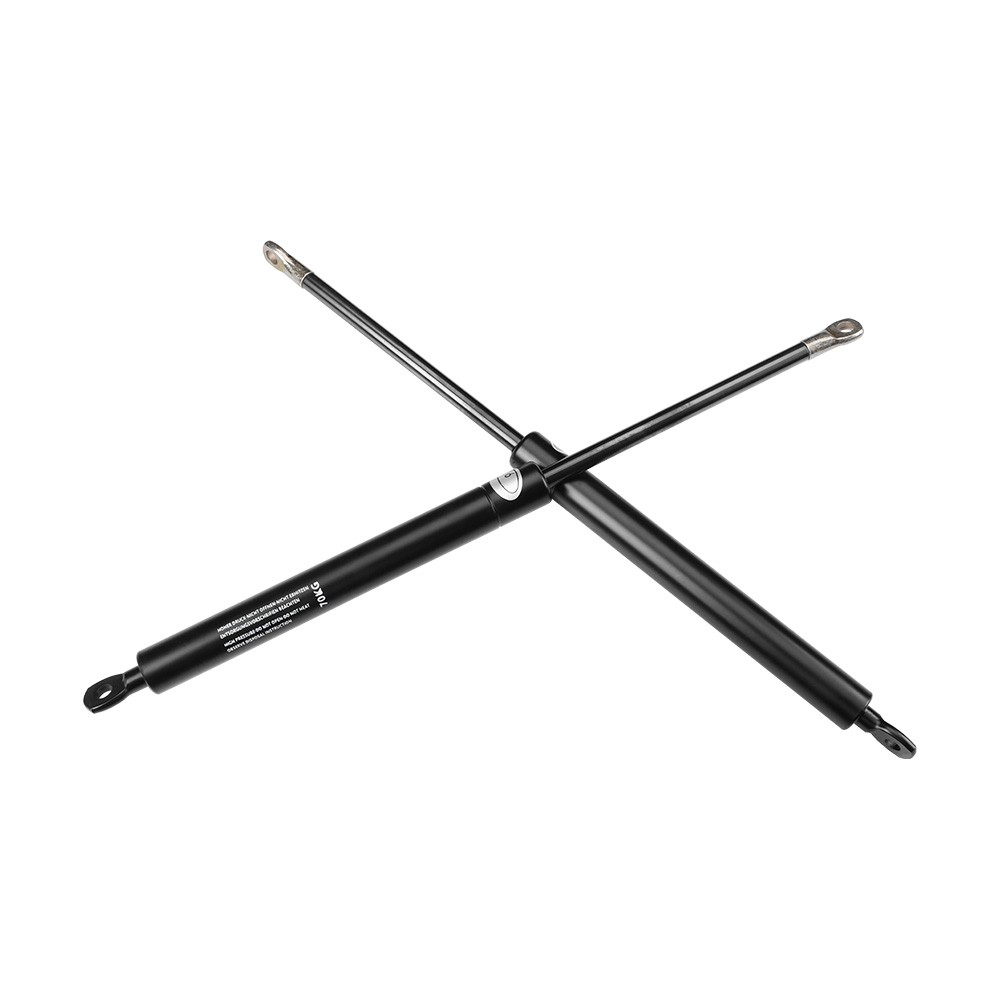
Evaluating the current hardware setup dictates the purchasing path. Retrofitting a standard, static bed requires a comprehensive installation kit. These kits include matched left and right struts. They provide heavy-duty mounting brackets engineered for the specific force loads. Installation templates ensure the pivot points align correctly. Attempting a retrofit without a complete kit usually results in severe geometry errors. You will spend hours drilling extra holes trying to find the correct leverage point.
Sourcing a standalone furniture gas spring makes sense for OEM replacements. If the factory struts lose pressure, you only need the cylinder. You can reuse the existing mounting brackets. Read the Newton (N) rating printed on the old cylinder barrel. Order an exact match for the extended length and force rating. This provides a fast, direct swap without modifying the wooden frame.
Accurate load calculation prevents dangerous hardware failures. You must weigh the fully loaded bed platform. This includes the mattress, the wooden frame, and all heavy bedding. Guessing the weight based on mattress shipping labels will result in incorrect strut sizing.
Place the mattress and all daily bedding onto the platform.
Lift the foot of the bed to your target opening height.
Wedge a sturdy wooden prop board vertically under the lifting edge.
Slide a standard bathroom scale directly under the prop board.
Lower the bed weight fully onto the prop and record the scale reading.
The mathematical relationship between the center of gravity, the hinge point, and the required Newton rating is strict. The scale reading represents the force required at the lifting edge. The gas struts mount much closer to the hinge. This creates a lever effect. The required strut force will be significantly higher than the scale reading. Consult a manufacturer load calculator to convert the edge weight into the required strut force based on your specific mounting distance.
Defining the required opening angle ensures ergonomic access to the storage compartment. A shallow angle forces users to crawl under a heavy, suspended load. A steep angle provides clear, standing access. The stroke length determines how far the cylinder rod travels. This directly controls the maximum opening angle. If you want the bed to open higher, you need a longer stroke.
You must match the strut's extended length to the physical constraints of the bed box. Over-extension causes the hinges to bind and tear out of the wood. Under-extension prevents the bed from opening fully. Measure the distance between the upper and lower mounting points when the bed is propped open at the ideal angle. This measurement equals your required extended length. Always measure twice before ordering replacement cylinders.
Evaluating the structural integrity of end fittings is mandatory. Ball studs, eyelets, and clevis forks handle different types of stress. Ball studs allow for slight lateral movement. This prevents binding if the bed frame flexes slightly during operation. Clevis forks provide rigid, heavy-duty connections for perfectly aligned metal frames. Most wooden bed frames utilize ball studs to accommodate natural wood shifting.
Heavy-gauge steel mounting brackets are non-negotiable for bed lift applications. Lighter furniture gas springs use thin stamped metal brackets. A 120-pound bed strut will instantly bend a thin bracket. The brackets must feature multiple mounting holes to distribute the sheer force across a wider surface area of the wood.
End Fitting Load Characteristics
| Fitting Type | Flexibility | Ideal Frame Material | Load Capacity Rating |
|---|---|---|---|
| Ball Stud (10mm/13mm) | High (allows lateral pivot) | Wood / MDF | Medium to High |
| Welded Eyelet | Low (fixed pivot) | Steel / Aluminum | Very High |
| Clevis Fork | None (rigid linear motion) | Heavy Steel | Extreme |
Exactly matching existing factory struts offers the easiest installation path. You simply snap the old units off the ball studs and snap the new ones on. This requires zero drilling and zero geometry calculations. However, factory struts are calibrated for the factory mattress. If you change the mattress, the original struts will fail to perform correctly.
Utilizing specialized supplier calculators to upgrade to higher-capacity struts becomes necessary when upgrading to a heavier mattress. Adding a dense memory foam mattress easily adds 40 pounds to the platform. The original OEM struts will not hold the bed open. You must calculate the new total weight and order aftermarket struts with a higher Newton rating. This trade-off requires careful measurement but ensures safe operation. Never try to force an under-specced strut to hold a heavy mattress.
Evaluating the lifespan of budget gas struts against premium units reveals stark differences. Budget cylinders use cheap rubber seals and standard air mixtures. They lose pressure rapidly after a few hundred cycles. Premium cylinders feature nitrogen-filled chambers and high-grade internal seals. Nitrogen resists temperature fluctuations and maintains consistent pressure over thousands of cycles.
The hidden costs of premature seal failure far outweigh the initial savings of a budget strut. When a cheap seal blows, the bed drops instantly. This leads to potential injury. It also causes replacement labor downtime and damaged bed frames. Investing in high-cycle-life cylinders guarantees long-term reliability and physical safety. You will spend more upfront, but you will avoid replacing the hardware every two years.
Risk: Upgrading to a heavier mattress alters the load dynamics completely. Adding a thick memory foam topper or storing heavy accessories on top of a folded Murphy bed increases the downward force. The existing struts can no longer overcome gravity. The bed drops unexpectedly, creating a severe hazard.
Mitigation: Recalculating the required force rating based on the maximum daily load mitigates this risk. Do not base calculations on the bare mattress weight alone. Include the heaviest winter blankets, toppers, and pillows. It is safer to slightly over-spec the strut by 5-10% to account for future bedding changes.
Risk: Mounting the strut too close to the hinge requires exponentially more force to lift the platform. The lever arm is too short. Conversely, mounting it too far from the hinge limits the opening angle. The strut bottoms out before the bed closes, preventing the platform from sitting flat.
Mitigation: Utilizing manufacturer-provided mounting templates eliminates guesswork. Calculate the exact pivot point based on the extended and compressed lengths. Perform a dry fit before drilling any holes. Clamp the brackets in place and manually cycle the bed to ensure smooth operation without binding.
Risk: High-pressure gas struts exert massive force against their mounting points. Thin plywood, particleboard, or MDF frames cannot withstand this localized stress. The struts will tear the mounting screws straight out of the wood during the first compression cycle.
Mitigation: Reinforcing mounting points is a mandatory installation step. Use steel backing plates on the opposite side of the wood. Utilize through-bolts with nylon lock nuts instead of standard wood screws. If through-bolting is impossible, glue and screw solid hardwood blocks to the inside of the frame to anchor the brackets securely.
Risk: Gas springs lose internal pressure and lift force in cold environments. The nitrogen gas condenses as temperatures drop. This is a frequent issue in uninsulated RVs, camper vans, and hunting cabins. A bed that stays open perfectly in July might slam shut in December.
Mitigation: Selecting struts with broad temperature operating ranges mitigates this failure. For cold-climate applications, slightly over-spec the force rating. If calculations call for 400N, install a 450N strut. This ensures sufficient lifting force remains available even when the internal gas pressure drops during freezing conditions.
Weigh the fully loaded bed platform at the lifting edge using a prop board and a standard bathroom scale.
Measure the desired opening angle to determine the exact stroke length required for your frame.
Reinforce all wooden mounting points with steel backing plates or through-bolts to prevent structural tear-out.
Consult a technical strut calculation tool or manufacturer guidelines to convert your edge weight into the correct Newton rating.
A: Weigh the lifting edge of your fully loaded bed using a prop and a bathroom scale. Measure the distance from the hinge to your planned mounting point. Use a manufacturer load calculator to convert this edge weight into the required Newton (N) force rating based on your specific geometry.
A: Gas lift beds utilize the entire internal volume of the bed frame without requiring floor clearance to pull out drawers. They eliminate dead space in the center of the bed and provide unobstructed, ergonomic access to large items from the top down.
A: If you are converting a static bed into a storage bed, you need a complete kit. Kits provide the heavy-duty brackets and geometry templates required for a safe retrofit. Standalone springs are only suitable for replacing existing, failed factory struts.
A: No. Cabinet struts are designed for lightweight overhead doors and exert minimal force. A bed platform requires heavy-duty cylinders capable of handling massive loads. A cabinet strut will collapse instantly under the weight of a mattress.
A: The gas springs are over-specced for the current weight of the bed. If you removed a heavy mattress and replaced it with a lighter one, the struts now exert too much upward force. You must replace the struts with lower-rated cylinders.
A: Locate the printed label on the barrel of the cylinder. Look for a number followed by "N" (e.g., 500N). This indicates Newtons of force. Divide the Newton rating by 4.448 to convert the force into pounds. A 500N strut provides roughly 112 pounds of force.


