

close
Choose Your Site
Global
Social Media

When it comes to lifting heavy objects, controlling motion, or providing smooth movement in various systems, gas springs play a critical role. They are versatile devices commonly found in everyday applications like office chairs, car hoods, and industrial machinery. But often, people confuse gas springs with hydraulic systems, thinking they perform the same functions. The question arises: Is a gas spring hydraulic?
In this article, we will delve into the fundamental differences between gas springs and hydraulic systems, their mechanisms, and applications. By the end, you'll understand why gas springs are not technically hydraulic systems, despite their similar applications and functions.
A gas spring is a hydro-pneumatic device that uses pressurized gas, typically nitrogen, to exert a force and control movement. The gas is contained within a sealed cylinder, and the pressure creates a smooth and controlled lifting or dampening action. These devices, often referred to as gas struts or gas dampers, rely on the interaction between a gas and a small amount of oil-based lubricant to provide consistent energy storage and controlled movement.
Gas springs are used in a wide variety of applications. From car hoods to adjustable furniture, gas springs have become an indispensable part of modern engineering and design. Some of the most common applications of gas springs include lifting heavy objects, controlling motion, and providing cushioned support for various mechanical systems.
To understand how gas springs work, let's compare them to a bicycle pump. When you press down on a bicycle pump, the piston forces air into the chamber, compressing it. Similarly, in a gas spring, the piston moves through a sealed cylinder, and gas is compressed to create pressure.
The gas inside the cylinder resists the piston’s movement, which results in a controlled force. This force can either lift, dampen, or slow down the movement of the system. By controlling the flow of gas through the piston, manufacturers can adjust the force exerted by the gas spring to suit the specific application.
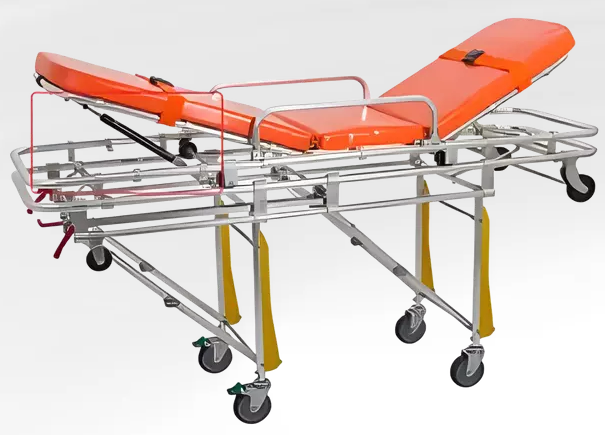
Hydraulic systems rely on liquid pressure, often in the form of oil, to create force. These systems typically consist of a piston, cylinder, and fluid. When pressure is applied to the fluid, it forces the piston to move, generating a mechanical output.
The key difference between hydraulic and gas systems lies in the medium used to store and release energy. While hydraulic systems use liquid to exert pressure, gas springs use gas, specifically nitrogen, in a sealed chamber. This distinction makes the behavior of the two systems different, even though their functions may appear similar.
A hydraulic system works by applying pressure to a liquid that is incompressible, meaning the volume of the liquid does not change under pressure. When a force is applied to the fluid in the system, it transmits that force to the piston, which then moves or exerts force on the connected system.
Hydraulic systems are known for their high force capabilities and are often used in heavy-duty applications like construction equipment, press machines, and industrial machinery. The fluid’s incompressibility allows for a much higher force output compared to gas-based systems.
While gas springs and hydraulic systems share some similarities, they are not the same thing. Gas springs use pressurized gas, typically nitrogen, to exert force, while hydraulic systems rely on pressurized liquids. Though both systems store and release energy, the primary difference lies in the medium used to create pressure.
Gas Springs: Utilize compressed gas (usually nitrogen) and oil to create a smooth, controlled motion.
Hydraulic Systems: Rely on pressurized liquids (usually oil) to generate higher forces.
Gas Springs are typically used for lighter-duty applications, such as automotive hoods, furniture, and light machinery. They offer smooth movement with a limited force range (usually between 50N to 2500N).
Hydraulic Systems, on the other hand, are ideal for heavy-duty applications requiring high force, such as construction equipment or industrial presses.
Although gas springs and hydraulic systems both perform similar functions, they are optimized for different uses and applications.
Gas springs are commonly found in vehicles, particularly in hatchbacks, tailgates, hoods, and compartments. They are used to lift, support, and lower heavy car components smoothly. The gas springs in vehicles make it much easier for drivers to operate heavy doors without exerting excessive force.
In hatchback cars, for example, the gas struts support the weight of the rear tailgate, ensuring it opens and closes effortlessly. The gas spring provides the necessary lift without requiring manual effort, making the process smoother for the user.
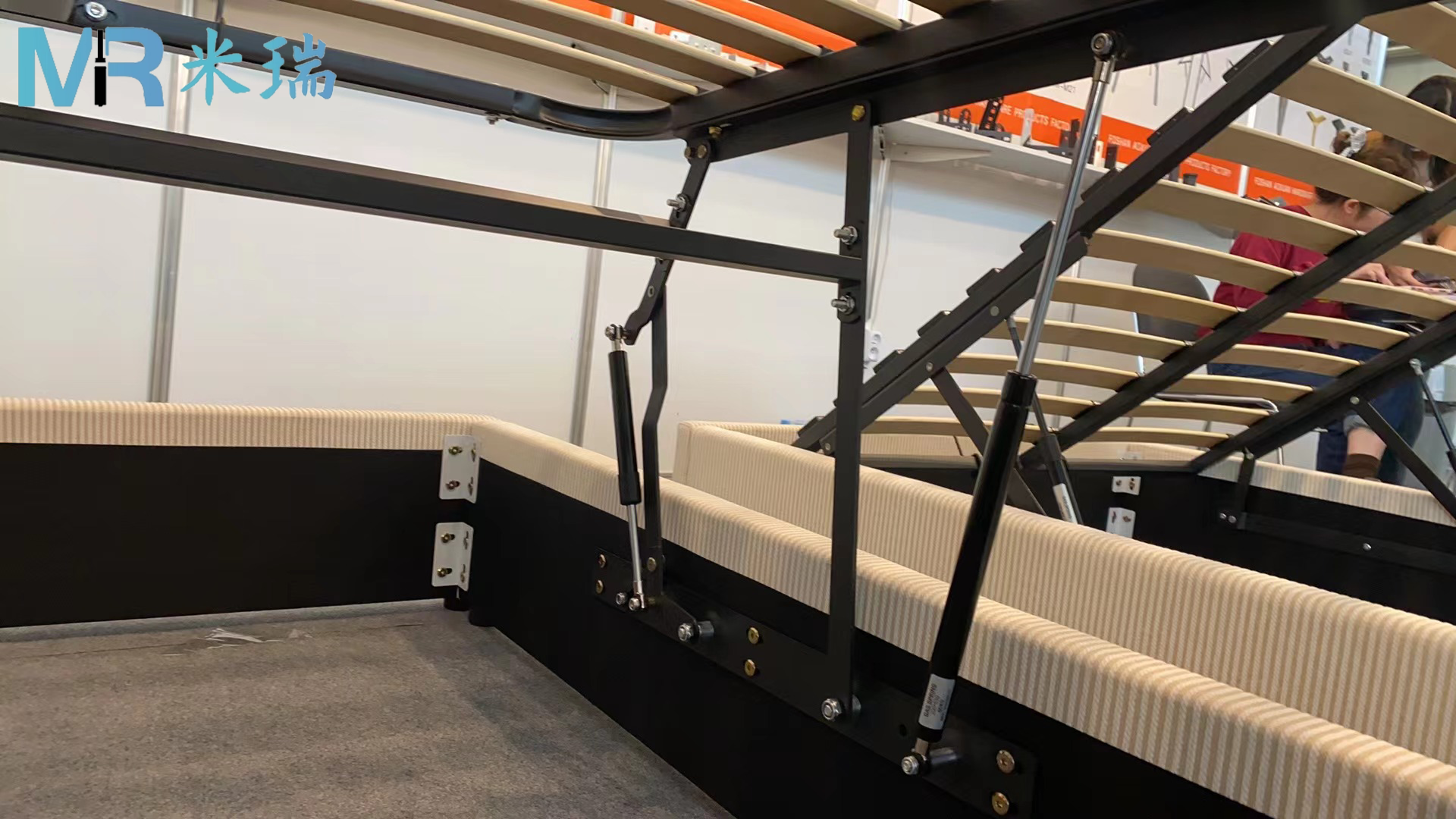
Gas springs are widely used in office chairs, adjustable desks, beds, and other types of furniture. In office chairs, gas springs provide height adjustment by lifting or lowering the seat in a controlled manner. The gas springs are usually designed to offer resistance when the chair is lowered, cushioning the downward movement and offering smooth adjustment.
Similarly, adjustable tables and beds use gas springs to enable height adjustment, making them easy to operate without exerting force.
In industrial settings, gas springs are used to lift heavy platforms, hold components in position, and provide smooth, controlled movement for machinery. These springs are used to assist in lifting heavy panels, doors, and hatches.
They are ideal for industrial applications because of their compact design and long lifespan, which reduces the need for frequent maintenance.
One of the key advantages of gas springs is their compact size compared to hydraulic systems. Gas springs do not require large cylinders or complex hydraulic pumps, making them ideal for applications where space is limited.
Gas springs tend to last longer than hydraulic systems. Because they use nitrogen gas, which does not degrade over time like hydraulic fluid, they are more durable and require less maintenance.
Gas springs operate without the need for external power sources. Once the gas is compressed and stored inside the cylinder, the spring operates autonomously, making it energy-efficient. In contrast, hydraulic systems rely on pumps and motors to maintain fluid pressure, which consumes energy.
Gas springs are more corrosion-resistant than hydraulic systems. The absence of liquid components means that there is less risk of rust or corrosion in the components, making gas springs suitable for harsh environmental conditions.

A common misconception is that gas springs are essentially hydraulic springs. While both systems may serve similar functions, the key difference lies in the medium used to create force—gas for gas springs and liquid for hydraulic systems. This fundamental difference leads to varied force outputs and applications for each type of system.
Gas springs are incredibly versatile but are best suited for light to medium-duty applications. They are not typically designed for extremely heavy-duty tasks, where hydraulic systems are often used due to their higher force output.
While hydraulic systems are capable of higher force outputs due to the incompressibility of the liquid, gas springs are more versatile and offer smoother, more controlled movements. The force exerted by a gas spring can be adjusted, making it suitable for a wider range of applications.
Gas springs are ideal for applications where space is limited, force is moderate, and smooth, controlled movement is required. Some typical scenarios include:
Adjustable furniture
Automotive compartments
Light industrial machinery
Hydraulic systems are best suited for high-force applications, such as heavy lifting, industrial presses, and construction equipment. If the task requires high resistance and heavy-duty performance, a hydraulic system is the better choice.
Weight and size of the load: Gas springs are better for lighter loads, while hydraulic systems excel at heavy-duty lifting.
Space constraints: Gas springs are more compact and suitable for tight spaces.
Maintenance and lifespan: Gas springs generally require less maintenance and last longer than hydraulic systems.
While both systems are safe when properly maintained, gas springs tend to have fewer risks associated with leaks or fluid degradation compared to hydraulic systems, which require careful fluid management.
Yes, gas springs can be used in various temperature ranges, though their efficiency may decrease in extreme conditions. They perform best in moderate temperatures.
Yes, gas springs can fail if overused or improperly maintained, but their design generally makes them more durable and less prone to failure compared to hydraulic systems.
In conclusion, while gas springs and hydraulic systems may appear similar in some ways, they are distinct in their design, function, and applications. Gas springs use pressurized gas to create controlled movement and are best suited for light to medium-duty tasks. On the other hand, hydraulic systems rely on liquid pressure and are ideal for heavy-duty applications that require high force.
By understanding the differences and advantages of each system, you can make an informed decision when choosing between gas springs and hydraulic systems for your specific needs.


